
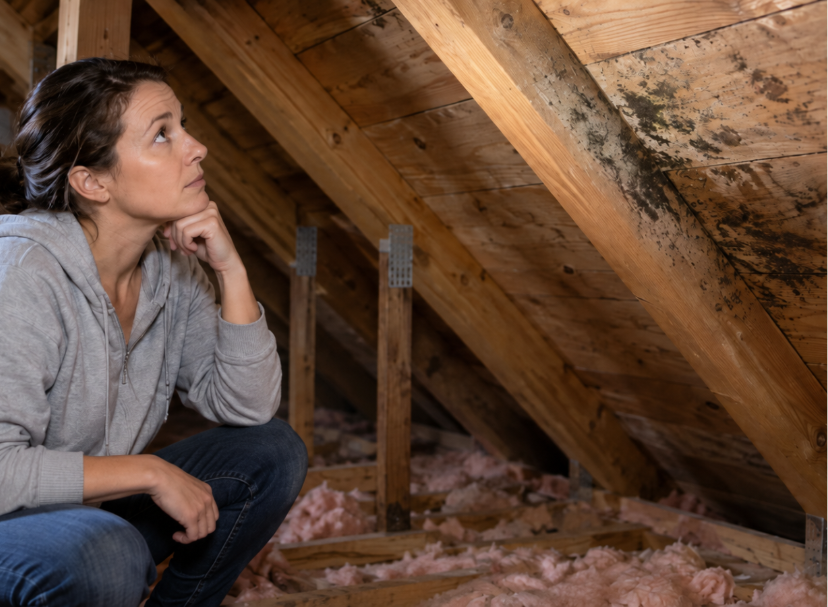
What to Understand Before Trying Attic Mold Removal Yourself
When attic mold appears limited to a small patch on framing, roof decking, or another visible surface, it can be tempting to assume that a little bleach and a rag will take care of it. The problem is that what you can see may represent only one part of the issue. Attic mold removal involves more than cleaning visible growth from the surface.
Fully resolving the problem requires determining how extensive the mold is, identifying and correcting the moisture conditions that allowed it to develop, containing the affected area during treatment, and addressing damaged materials when necessary. Missing any of these steps can leave growth or contributing conditions behind.
Mold remediation professionals have the knowledge, equipment, and experience needed to evaluate the attic as a whole and carry out the full process.
Why Attic Mold Must Be Addressed
Attic mold can affect more than the surfaces where growth first appears. Persistent moisture can damage roof decking, rafters, framing, and insulation, while mold spores can become airborne and move through openings between the attic and the rooms below. If the problem remains untreated, growth can spread across additional attic materials and potentially affect other parts of your home.
How Attic Mold Is Properly Treated
Mold treatment begins with evaluating the attic to determine how extensive the growth is and identify the moisture conditions that allowed it to develop. The affected area is then contained to help limit the movement of spores during removal. Mold is removed or treated on the materials involved, and components that are too damaged may need to be replaced. The moisture source must also be corrected so the attic no longer provides the same conditions for growth.
Where DIY Attic Mold Removal Can Fall Short
Most homeowners don’t have the specialized knowledge, tools, or experience needed to fully evaluate an attic mold problem. Hidden growth can be missed, the source of excess moisture may be difficult to identify, and proper containment can be challenging without the right equipment.
Effective attic mold removal in Hartford, CT, requires addressing both the mold and the conditions that allowed it to develop. If affected areas are overlooked or the moisture problem remains, a DIY cleanup may leave part of the problem unresolved.
The Hazards of Removing Mold From an Attic
Attics can be difficult places to work, with limited walking surfaces, low-clearance areas, protruding nails, electrical wiring, insulation, and extreme temperatures. A misplaced step between ceiling joists can also result in a fall through the drywall below.
Mold adds another layer of risk. Disturbing affected materials can release spores and other particles into the air, increasing the potential for eye, skin, or respiratory irritation. Professional remediation technicians are equipped with appropriate respiratory protection and other personal protective equipment for this type of work, while homeowners attempting DIY removal may not have access to or use the same level of protection.
Choose Professional Help for a Complete Attic Mold Solution
Attic mold removal involves more than cleaning visible growth. The full extent of the mold needs to be identified, spores need to be controlled during treatment, affected materials must be addressed, and the moisture problem behind the growth has to be corrected. Professionals have the training, equipment, and experience to manage each of these steps more thoroughly than a typical DIY cleanup.
Green Home Solutions provides attic mold removal in Hartford, CT, with treatment based on the specific conditions found in your attic. Our team can evaluate the growth, identify contributing moisture problems, establish appropriate containment, and treat affected materials.
Contact us today to schedule an attic inspection and get clear recommendations for addressing the mold in your home.