
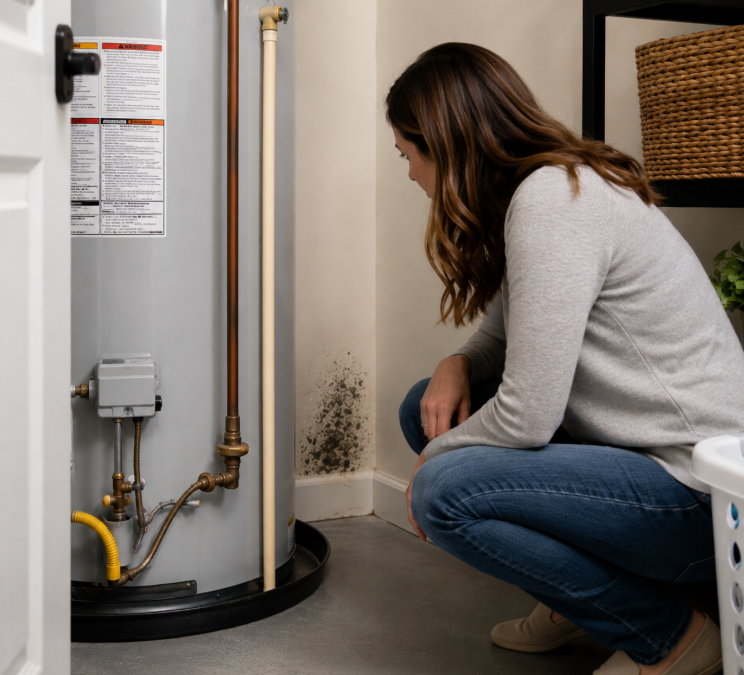
Mold does not develop randomly. If you have ever wondered why it seems to appear in certain parts of a home while other areas remain unaffected, the answer often comes down to the conditions present in those spaces. Some areas of a home are exposed to moisture more often, dry more slowly, or receive less airflow than others. When those factors combine, mold has a greater opportunity to develop.
Areas Exposed to Frequent Moisture
Rooms that regularly come into contact with water are among the most common places for mold growth. Bathrooms, kitchens, laundry rooms, and similar spaces experience ongoing moisture from showers, sinks, appliances, and everyday activities. When water accumulates on surfaces or dampness lingers for extended periods, mold can begin growing on nearby materials.
Spaces That Dry Slowly
Some parts of a home naturally retain moisture longer than others. Basements and crawl spaces often fall into this category because they can experience elevated humidity levels and limited drying conditions. Even minor moisture issues can become more significant when dampness remains present for long periods.
Areas With Limited Airflow
Air circulation plays an important role in helping moisture evaporate. Closets, storage areas, and spaces behind large furniture may receive very little airflow, allowing damp conditions to persist longer than they would in open areas. Because these locations are not always inspected regularly, mold growth may go unnoticed until it becomes more extensive.
Spaces Affected by Leaks
Leaks can create ideal conditions for mold development. Plumbing issues, roof leaks, and moisture intrusion around windows can introduce water into walls, ceilings, flooring, and other materials. When the source of the leak remains unresolved, mold often continues developing within the affected area.
What Happens When Mold Continues Growing
What begins as a localized mold issue can eventually affect additional parts of the home. As growth continues, additional materials can become involved, increasing the scope of the issue. The longer moisture remains available, the more opportunity mold has to spread into nearby areas of the property.
Successfully addressing mold involves more than cleaning visible surfaces. The moisture source must also be identified and corrected. Professional inspections can help determine where mold is present and what conditions are contributing to its growth. When treatment is needed, mold remediation in Hartford, CT, can help remove affected mold growth while addressing the conditions that allowed it to develop.
Address Mold Problems Before They Expand
Green Home Solutions helps homeowners understand where mold is growing, what is causing it, and how it can be effectively treated. Our services include mold inspections, testing, remediation, and indoor air quality solutions designed to address both visible and hidden mold issues.
If mold has become established within your property, mold remediation in Hartford, CT, can help restore affected areas and reduce the likelihood of continued growth. Contact Green Home Solutions to schedule a mold inspection and learn more about available treatment options.