
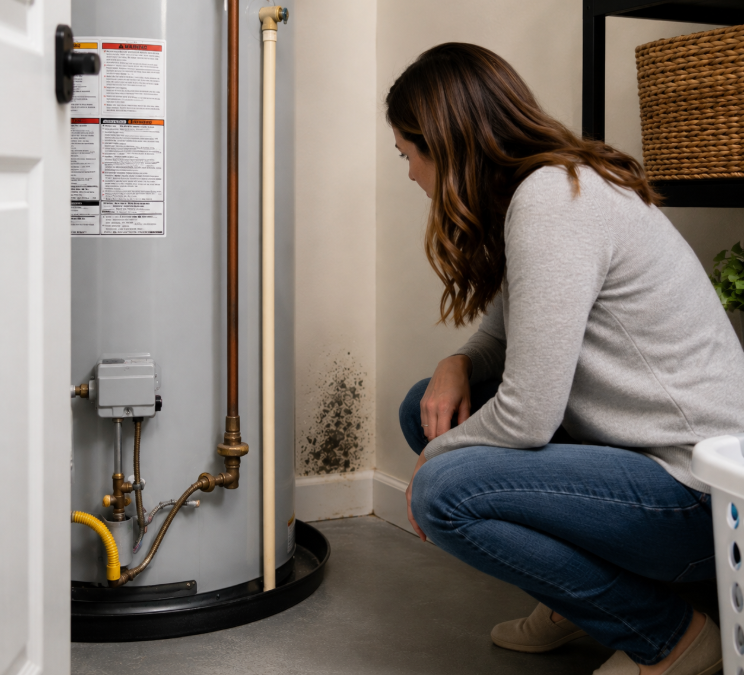
Many homeowners focus on moisture when they think about mold, but that alone does not explain why mold develops in some areas and not others. The conditions within a space, including how often it becomes damp, how quickly it dries, and how much air movement it receives, all influence whether mold has an opportunity to grow.
Looking at the common characteristics shared by mold-prone areas can help you better understand why certain parts of your home are more vulnerable than others.
Areas Exposed to Frequent Moisture
Many moisture problems are not caused by a single leak or isolated event. Instead, they develop through repeated exposure to water during normal daily activities. Bathrooms and kitchens experience this more than most other parts of a home.
Each shower, load of dishes, or use of a sink introduces additional humidity or surface moisture into the space. If those conditions are not adequately managed through ventilation and drying, mold may find opportunities to become established on nearby materials.
Spaces That Dry Slowly
Not every area of your home dries at the same rate. Basements and crawl spaces often retain moisture longer than living areas because they tend to receive less sunlight and airflow. When damp conditions linger, mold has more opportunity to become established within building materials and stored belongings.
Areas With Limited Airflow
Air circulation helps moisture evaporate. In spaces where airflow is restricted, dampness can remain longer than expected. Closets, storage areas, and spaces behind large furniture are common examples. Because these locations are not always visible during daily routines, mold growth may continue unnoticed.
Spaces Affected by Leaks
Water entering your home through a plumbing issue or roof leak can create ideal conditions for mold. Even a small leak can affect drywall, insulation, wood, flooring, and other materials. If the source of the water is not identified and corrected, mold may continue developing within the affected area.
What Happens When Mold Continues Growing
The presence of mold often indicates that moisture has been affecting an area for longer than expected. If the underlying issue remains unresolved, conditions within the affected area may continue evolving even when only a small amount of mold is visible at first.
What you can see on the surface does not always represent the full extent of the problem. Moisture may still be present within nearby materials, creating an environment where mold can remain active. An inspection can help provide a clearer understanding of what is occurring within the affected area and whether additional materials have been impacted.
When corrective action is needed, mold remediation in Auburn, MA, focuses on removing mold from your property while addressing the moisture issue contributing to its presence. By resolving both parts of the problem, you can better reduce the likelihood of continued mold development.
Address the Conditions Supporting Mold Growth
The areas of a home that are most vulnerable to mold often share similar characteristics, including moisture exposure, limited airflow, or conditions that make drying difficult. Identifying those contributing factors is an important part of preventing mold from continuing to affect your property.
Whether mold is developing in a basement, crawl space, closet, or another moisture-prone area, Green Home Solutions provides services designed to identify the source of the problem and recommend appropriate treatment options. If you need mold remediation in Auburn, MA, our team can help evaluate the situation and determine the best path forward.
Contact Green Home Solutions today to schedule a mold inspection and learn more about available solutions.