
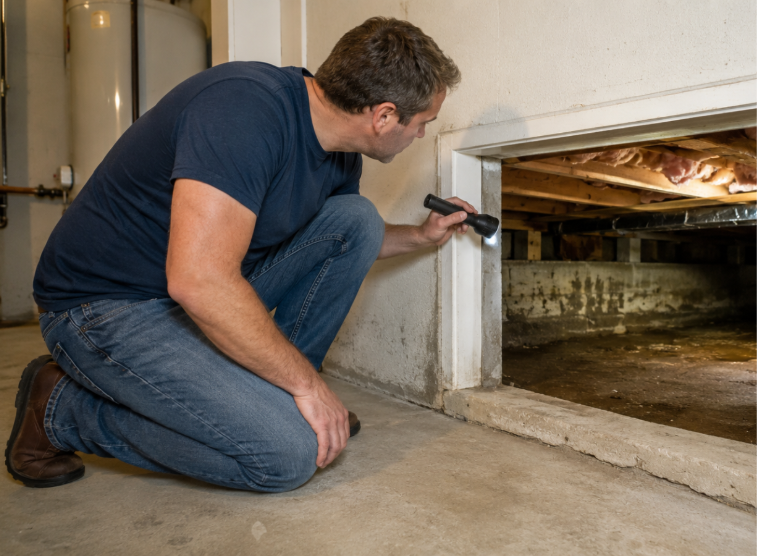
Your crawl space can develop mold when leaks, water intrusion, high humidity, or other damp conditions affect the materials below your home. Once growth begins, it may damage wood and other building materials, affect the air entering your living space, and spread beyond the area where it started.
Because your crawl space is difficult to access, mold can remain hidden without producing visible signs in your living space. A professional inspection is important if you suspect mold or have experienced a water intrusion event that could have created suitable conditions. Accurate detection and thorough crawl space mold treatment can address the existing growth, while remediation and moisture-control strategies help correct the conditions that allowed it to develop.
What Can Cause Crawl Space Mold?
Crawl space mold develops when moisture remains present long enough for growth to occur. Water vapor can rise from exposed soil, especially when the area lacks an effective vapor barrier. Plumbing leaks, damaged drain lines, and loose appliance hoses can also keep materials damp, while clogged gutters, broken downspouts, and improper grading may direct rainwater toward your foundation.
Humidity and condensation can add to the problem. Warm outdoor air entering through foundation vents may condense on cooler framing or ductwork. Damaged duct insulation, restricted airflow, and dryer exhaust released into or near your crawl space can introduce additional moisture or prevent the area from drying properly.
Why Is Crawl Space Mold a Problem?
Crawl space mold can affect both your living space and the materials beneath your floors. As air rises through your home, it may carry mold spores and musty odors from the crawl space into the rooms above. Exposure can contribute to coughing, sneezing, allergy symptoms, and asthma flare-ups in people who are sensitive to mold.
Mold also damages the surfaces on which it grows, including floor joists, subflooring, and insulation. The persistent moisture supporting that growth can contribute to wood decay, warped or sagging floors, and conditions that attract insects and rodents. Addressing the problem early can help limit its effects on your indoor air and property.
How Is Crawl Space Mold Identified and Removed?
A musty odor, elevated indoor humidity, damp insulation, or discoloration on wooden framing may indicate mold beneath your home. However, these signs don’t reveal whether mold is present, how extensive the growth is, or why it developed. A professional crawl space inspection examines areas where mold is suspected, evaluates moisture conditions, and determines whether testing is needed to confirm its presence.
Professional crawl space mold removal in Grand Rapids, MI, is based on the materials involved and the extent of the problem. Removing mold from a crawl space may require containment, specialized equipment, treatment of salvageable surfaces, and removal of materials that can’t be restored. The process should also account for the source of moisture so the conditions supporting the growth can be corrected.
How Can I Prevent Crawl Space Mold?
After mold removal in crawl spaces, controlling moisture is essential for reducing the likelihood of new growth. A durable vapor barrier can limit moisture rising from exposed soil, while a dedicated dehumidifier can maintain humidity at a level that is less favorable for mold growth. Plumbing lines, HVAC condensation lines, and foundation walls should also be checked periodically so leaks and water intrusion can be corrected promptly.
Water outside your home requires attention as well. Clear gutters, extended downspouts, and proper yard grading help direct rainwater away from your foundation. If moisture remains difficult to control, encapsulation may be recommended to cover exposed soil, seal foundation walls and openings, and separate your crawl space from humid outdoor air.
Protect Your Home From Crawl Space Mold
Moisture beneath your home can lead to mold growth, damage to building materials, and changes in the air entering your living space. Crawl space mold removal in Grand Rapids, MI, addresses the existing growth while identifying the conditions that allowed it to develop.
If you have noticed musty odors, excess humidity, or other possible signs of mold, contact us to have your crawl space evaluated and find a solution suited to your home.