
Why Cleaning the Surface Doesn’t Resolve the Entire Problem
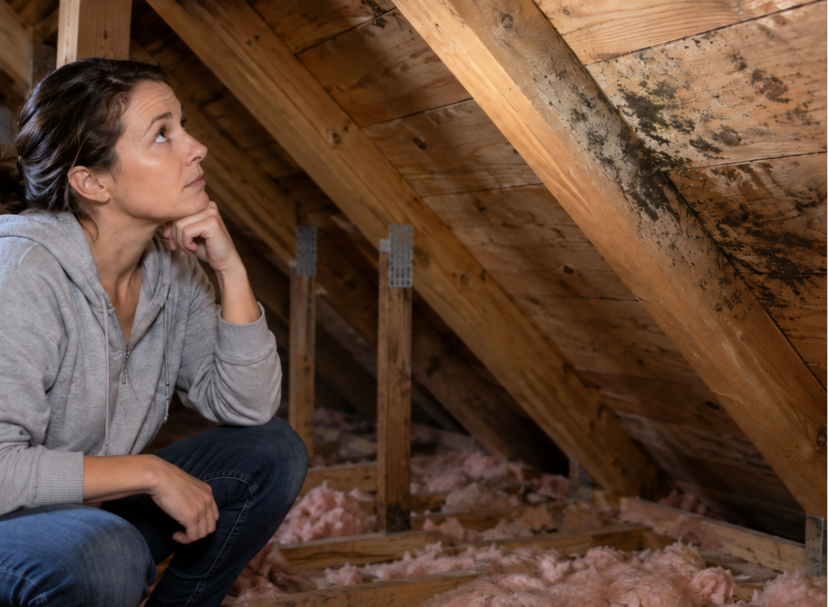
Mold on attic framing, roof decking, or insulation can look like a surface problem that simply needs to be cleaned away. In reality, attic mold usually develops because excess moisture has created conditions that allow growth, and removing what you can see doesn’t correct the conditions behind it.
That moisture can come from several sources. Roof leaks, inadequate ventilation, condensation on cooler attic surfaces, or bathroom and kitchen exhaust fans that release humid air into the attic can all contribute. Warm air from your living space can also rise into the attic and condense when it meets colder roof decking, particularly during cooler weather.
Visible growth may not show the full extent of the problem, either. Mold can extend along framing, behind insulation, or into areas that are difficult to see from an attic access point. Effective treatment therefore requires understanding both where the mold is growing and why it developed in the first place.
Leaving Attic Mold Untreated Can Make the Problem More Extensive
As long as sufficient moisture remains, attic mold can continue spreading across materials that support growth. Roof sheathing, rafters, framing, paper-faced insulation, and accumulated dust all provide surfaces where mold can become established.
The moisture responsible for the growth can create additional problems as well. Wooden components that remain damp for extended periods can begin to deteriorate, while wet or compressed insulation may lose effectiveness and, depending on its condition, require replacement.
An attic mold problem can also affect areas beyond the attic. Air can move through attic access points, gaps around fixtures and utilities, and other ceiling openings, carrying airborne spores with it. Leaks in attic ductwork can create another pathway into the air circulating throughout your home.
Addressing the problem promptly can limit how much attic material becomes involved, reduce the potential for spores to reach other areas, and help prevent a relatively limited problem from requiring more extensive remediation or repairs.
What a Complete Attic Mold Removal Process Involves
Effective attic mold removal in Haverhill, MA, starts with determining how extensive the growth is and identifying the conditions that allowed it to develop. An inspection or assessment can reveal affected materials that aren’t immediately visible and help pinpoint whether the moisture is coming from a leak, condensation, ventilation problem, improperly vented exhaust fan, or another source.
Before removal begins, the affected area should be contained to help keep spores from spreading into unaffected portions of the attic or other parts of the home. Mold can then be removed or treated on the materials involved, while materials that have been too extensively damaged may need to be replaced.
The underlying moisture problem also needs to be corrected. Depending on what is found, that may involve repairing a roof leak, improving ventilation, redirecting an exhaust fan, or addressing condensation. Removing existing growth without changing the conditions that supported it leaves an important part of the problem unresolved and can allow mold to develop again.
How DIY Removal Can Leave Important Problems Behind
Trying to address attic mold yourself can make it difficult to know whether the entire problem has actually been resolved. Hidden growth may be missed, particularly when mold extends behind insulation, across framing, or into areas that are difficult to access.
The source of excess moisture may also be harder to identify than it first appears. A small roof leak, insufficient ventilation, condensation, or another building condition may require closer evaluation before the cause becomes clear. If that problem remains, cleaning visible mold won’t prevent the same conditions from continuing.
Containment presents another challenge. Disturbing affected materials can send spores into the surrounding air, and without proper containment, those particles can move beyond the area being cleaned. Different attic conditions and materials may also require different treatment methods, along with equipment for moisture detection, filtration, containment, and removal.
Even when a DIY cleanup leaves no visible mold behind, appearance alone doesn’t confirm that hidden growth, airborne contamination, or the contributing moisture problem has been fully addressed.
Consider the Safety Risks of Working in an Attic
Attics can be difficult places to work even before mold is involved. Flooring may be limited to narrow joists, creating a risk of falling through the ceiling if you step in the wrong place. Protruding nails, exposed wiring, insulation, low-clearance areas, and difficult access can add further hazards. Temperature is another consideration. Attics can become extremely hot during warmer weather and very cold during winter, making prolonged work uncomfortable and potentially unsafe.
Mold removal introduces additional exposure concerns. Scrubbing, cutting, moving insulation, or otherwise disturbing affected materials can release spores and other particles into the air. Without appropriate respiratory and personal protective equipment, that exposure can cause eye, skin, or respiratory irritation and may aggravate allergies or asthma in sensitive individuals.
These conditions make attic mold removal more than a routine cleaning project, particularly when the affected area is extensive or difficult to reach.
A Professional Approach Addresses More Than Visible Growth
Professional remediation is designed to address the mold problem as a whole rather than focusing only on the surfaces where growth is easy to see. A knowledgeable technician can assess the attic for visible and less obvious growth, evaluate moisture conditions, and determine which materials require treatment or replacement.
Containment can then be established before affected materials are disturbed, helping limit the movement of spores during the work. Appropriate treatment methods and equipment can be selected based on the materials involved and the extent of the problem.
Just as importantly, the conditions that allowed the mold to develop are evaluated as part of the process. Correcting the moisture source alongside the existing growth helps provide a more complete resolution and reduces the likelihood that the same attic conditions will continue supporting mold.
Choose Professional Attic Mold Removal for a More Complete Solution
DIY attic mold removal can leave too much uncertainty about hidden growth, containment, moisture conditions, and whether every affected material has been properly treated. Professional remediation provides a structured approach that addresses both the mold you can see and the conditions contributing to it.
Green Home Solutions provides attic mold removal in Haverhill, MA, with treatment plans based on the specific conditions found in your attic. Our team evaluates the extent of the growth, identifies contributing moisture problems, establishes appropriate containment, treats affected materials, and recommends the steps needed to correct the underlying cause.
If you’ve discovered mold in your attic or suspect it may be present, contact Green Home Solutions today to schedule an inspection or request a quote online.