
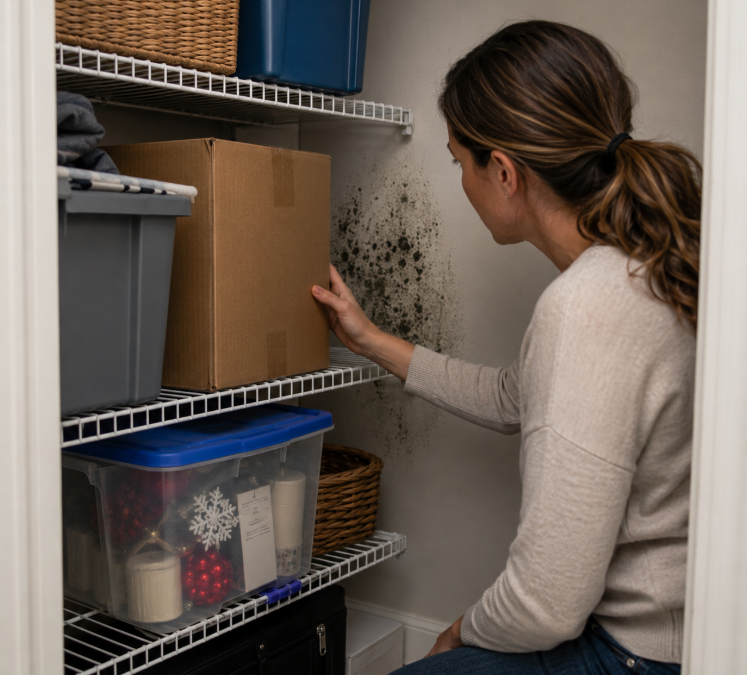
Many property owners only expect to find mold in the most obvious spots, like a shower that is used daily or a basement floor after a flood. But in reality, mold can also develop in areas where minor moisture issues persist without being seen. Even small amounts of moisture from humidity, condensation, or minor leaks can accumulate over time. Knowing where these trouble spots are can help you identify potential mold problems sooner and understand when mold remediation in Haverhill, MA, may be necessary.
Around Windows and Window Frames
Windows are often exposed to conditions that can lead to recurring moisture. Condensation develops when humidity levels are elevated or when temperature differences affect the glass and surrounding materials. Over time, that moisture can collect on window frames, tracks, and nearby drywall. If dampness remains present on a regular basis, it can create conditions that support mold growth around the edges of the window and surrounding surfaces.
Behind Furniture and Stored Belongings
Large pieces of furniture, cardboard boxes, and other stored items can restrict airflow when they remain in the same location for extended periods. These areas often receive less air circulation than the rest of the room, which can allow moisture to linger longer than expected. Because the spaces behind stored items are not routinely visible, developing moisture issues may go unnoticed. If damp conditions remain present, mold can grow on nearby walls, furniture, or other belongings before there is any reason to take a closer look.
Beneath Flooring Surfaces
A plumbing overflow, spill, or other moisture issue can appear resolved once the visible surface of the floor has dried. However, water can seep through gaps around baseboards or between flooring materials and reach the subfloor underneath. Because these areas receive very little airflow, moisture can remain present longer than expected. Mold can develop beneath carpeting, hardwood flooring, or other floor coverings while the surface above appears unchanged.
Areas Around Built-In Appliances
Appliances that use water are often installed within cabinetry or positioned close to walls. Dishwashers, refrigerator ice makers, and washing machines all rely on water supply lines that can develop leaks over time. Because these areas are not always easy to inspect, a slow leak can go unnoticed for an extended period. As moisture affects nearby drywall, wood, and other materials, mold can develop behind or around appliances without being immediately visible.
Attics and Crawl Spaces
Attics and crawl spaces often receive less attention than the main living areas of a home, which can make changes within these spaces more difficult to notice. They may be affected by humidity, roof leaks, ground moisture, and other sources of dampness. Because moisture in these areas is not always immediately visible and airflow may be limited, damp conditions can persist longer than expected. When moisture remains present on insulation, wood, and other materials, mold can develop without attracting immediate attention.
Locating and Correcting the Problem
Finding mold in an unexpected place often means there is an underlying moisture problem that needs to be addressed alongside the cleanup. Simply wiping away the visible growth does not stop the cycle if the underlying moisture source remains active.
If you find mold in your home and need mold remediation in Haverhill, MA, Green Home Solutions can help you get to the bottom of the problem. We can inspect your property, locate the moisture source, and provide you with options to treat the affected areas. Contact our team today to schedule an inspection.