
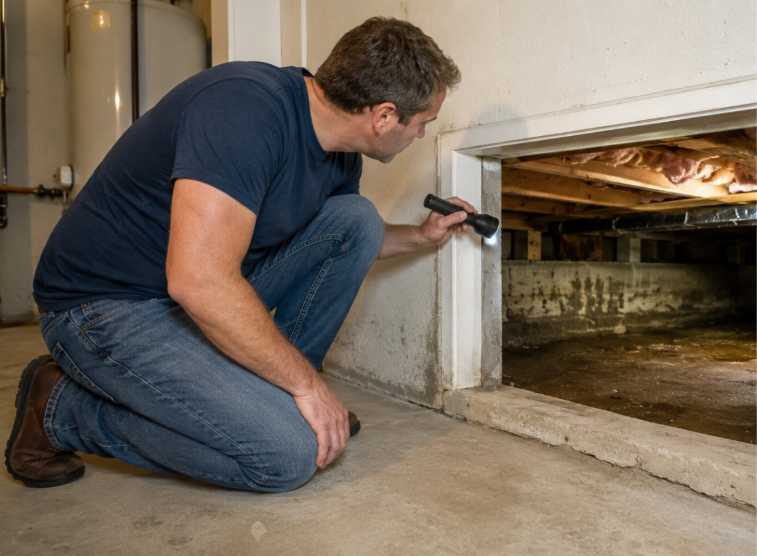
A plumbing leak, elevated humidity, poor drainage, or another moisture problem may create the conditions mold needs to develop beneath your home. Although the growth begins in your crawl space, the effects may not remain there. Mold can damage structural materials, release spores that affect your indoor air, and extend into additional areas when the source of moisture continues.
You don’t need to see visible growth to have reason for an inspection. If you notice possible signs of mold or your home has recently experienced water intrusion, a professional can determine whether growth is present and identify the conditions contributing to it. A complete crawl space mold treatment plan combines accurate findings, appropriate removal, remediation, and preventive measures to reduce the likelihood of the problem continuing or returning.
What Can Cause Crawl Space Mold?
Several moisture sources can create conditions for mold to grow in your crawl space:
- Exposed soil releasing water vapor into your crawl space
- A missing, torn, or inadequate vapor barrier
- Leaking plumbing, drain lines, or appliance hoses
- Clogged gutters or damaged downspouts
- Yard grading that directs rainwater toward your foundation
- Humid outdoor air condensing on cooler crawl space surfaces
- Condensation forming on damaged or poorly insulated air-conditioning ducts
- Dryer exhaust directing warm, humid air into or near the area
When ventilation and moisture control are inadequate, your crawl space may remain damp after water enters or humidity rises. Persistent moisture can then support mold growth on wood, insulation, and other materials.
Why Is Crawl Space Mold a Problem?
Air from your crawl space can enter the rooms above through gaps around flooring, pipes, wiring, and ductwork. This movement may carry mold spores and musty odors into your living areas. Mold exposure can cause coughing, sneezing, and other allergic reactions, and it may trigger asthma symptoms in people who are sensitive to it.
Mold also damages the materials on which it grows. When moisture remains beneath your home, wooden floor joists and subflooring may deteriorate or decay, potentially contributing to warped or sagging floors. The same damp conditions can also attract rodents and wood-destroying insects.
How Is Crawl Space Mold Identified and Removed?
Changes inside your living space may provide the first indication of a problem below. Persistent musty odors, worsening allergy symptoms, warped flooring, or unexplained humidity can all warrant a closer look. Because similar signs may have other causes, crawl space inspections are used to confirm whether mold is present, locate affected materials, and identify the moisture source.
Once the findings are clear, crawl space mold removal in Haverhill, MA, can be planned around the conditions beneath your property. Removing mold from crawl spaces requires careful measures to avoid disturbing the growth and spreading spores into surrounding areas. Professionals can isolate the work area, determine which materials can be treated, remove those that are too extensively affected, and recommend steps for resolving the moisture problem.
How Can I Prevent Crawl Space Mold?
Moisture can enter your crawl space from the ground, the air, plumbing components, or water collecting around your foundation. Addressing each source after mold removal in a crawl space reduces the likelihood of new growth. Covering exposed soil with a heavy-duty vapor barrier limits ground vapor, while a crawl space dehumidifier can maintain humidity at a level that is less favorable for mold. Covering exposed soil with a heavy-duty vapor barrier limits ground vapor, and using a crawl space dehumidifier can keep relative humidity at an ideal level.
Outside, gutters should remain clear, downspouts should discharge several feet from your foundation, and grading should direct rainwater away from your property. Prompt repairs to plumbing leaks, HVAC condensation lines, and foundation cracks can prevent additional dampness. Encapsulation provides more extensive moisture control by sealing the floor, walls, vents, and other openings, often with a dehumidifier used to manage humidity inside the enclosed area.
Address Mold Where It Begins
Crawl space mold may remain hidden until its effects become noticeable elsewhere in your home. Green Home Solutions provides crawl space mold removal in Haverhill, MA, to identify and remove existing growth, address the conditions contributing to it, and help reduce the likelihood of the problem returning.
If musty odors, elevated humidity, or other signs have raised questions about your crawl space, contact us to schedule an inspection and receive recommendations based on the conditions found.