
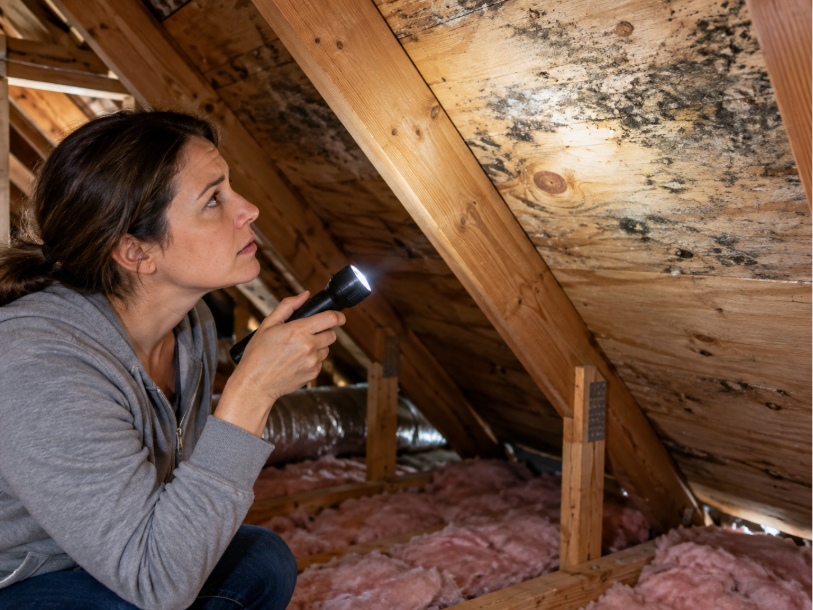
The Problems That Create the Conditions for Attic Mold
Attic mold usually develops because another problem has created the moisture it needs to grow. A roof leak, condensation, poor ventilation, humid air movement, or another moisture-related issue can leave attic materials damp enough for mold to develop on roof decking, framing, insulation facing, and other surfaces.
Removing the growth is only one part of resolving the problem. The conditions that allowed moisture to enter or accumulate in the attic also need to be identified and corrected. Otherwise, the attic can remain vulnerable to the same type of mold growth developing again.
Problem: Roof Leaks That Are Not Always Easy to Trace
An active roof leak is one of the more direct ways moisture can enter your attic, but not every leak is immediately obvious. Missing or damaged shingles, deteriorated flashing, worn seals around vents or other roof penetrations, and small gaps in roofing materials can all allow water inside. Once it enters, moisture may travel along roof decking, rafters, or framing before becoming visible, so damp materials or mold growth may develop some distance from the original point of entry. Small or intermittent leaks can also go unnoticed if they only occur during certain weather conditions.
Resolving this problem starts with locating and repairing the source of the water intrusion. Depending on what is found, this may involve replacing damaged roofing materials, repairing flashing, or correcting deteriorated seals around penetrations. Stopping additional water from entering allows affected attic materials to dry, but any mold that has already developed still needs to be addressed separately.
Problem: Condensation Across Cold Attic Surfaces
Condensation can develop when warm, moisture-containing air reaches colder surfaces inside the attic. Roof decking, rafters, exposed nails, and other components can all collect moisture when temperature differences are significant enough. Unlike a localized roof leak, condensation may form across broad sections of the attic, allowing multiple areas to become damp at the same time. If this happens repeatedly or the materials do not dry adequately between cycles, the lingering moisture can create conditions that support mold growth.
Correcting the problem requires determining why humid air is reaching cold attic surfaces and what is allowing condensation to persist. Depending on the conditions found, the solution may involve improving air sealing, ventilation, insulation, or indoor humidity control. Reducing the amount of moisture entering the attic and limiting temperature conditions that encourage condensation can help affected materials dry and prevent the same pattern from continuing.
Problem: Exhaust Fans That Release Moisture Into the Attic
Kitchen and bathroom exhaust fans are designed to carry humid air outdoors, but in some homes, the ductwork ends inside the attic instead. Each time someone takes a shower, runs a bath, or cooks, the fan can send additional moisture directly into the attic rather than removing it from the home. Because the ductwork is generally hidden from view, homeowners may not realize where the fan is venting or that it should terminate outdoors. Over time, repeated releases of humid air can leave nearby roof decking, framing, or insulation damp enough to support mold growth.
Correcting the problem requires rerouting the exhaust duct so it discharges outside through an appropriate roof or exterior-wall termination. The ductwork should also be checked for loose connections, damage, or other conditions that could allow moisture to escape into the attic. Once the ventilation is corrected, any materials already affected by prolonged moisture or mold will still need to be evaluated and addressed.
Problem: Warm Indoor Air Leaking Into the Attic
During colder weather, the stack effect can carry warm indoor air upward through the home. As that air rises, pressure differences can push moisture-containing air from cooking, showers, breathing, and other everyday activities through openings around recessed lights, plumbing penetrations, wiring, and attic access points. When the warm air reaches colder roof decking or framing, it can cool enough for moisture to form as condensation or frost. Repeated wetting can leave wood and insulation damp, creating conditions that support mold growth and contribute to material deterioration.
Correcting the problem involves reducing the amount of warm, humid air that can escape into the attic. Sealing gaps and penetrations between the living space and attic is an important step, along with addressing indoor humidity, insulation, or ventilation conditions that may be contributing to condensation. Once those pathways are controlled, any mold or moisture-damaged materials already present should still be evaluated and treated.
Address the Cause Along With the Attic Mold
Effective attic mold removal in Indianapolis, IN, requires more than treating the growth that has already developed. The roof leak, condensation, exhaust problem, air leakage, or other moisture condition that allowed the mold to form also needs to be identified and corrected.
A complete remediation process evaluates both the extent of the growth and the conditions behind it. The affected materials can then be treated or removed as appropriate, while the underlying moisture source is corrected so the attic is not left with the same conditions that supported the mold in the first place.
Hire a Professional Team to Address Your Full Attic Mold Problem
Attic mold can develop for several reasons, including roof leaks, condensation, improperly routed exhaust ducts, and humid indoor air leaking into the attic. Because each source requires a different correction, resolving the growth also means identifying what is creating the excess moisture and addressing that condition.
Green Home Solutions provides attic mold removal in Indianapolis, IN, with treatment based on the specific mold and moisture conditions found in your attic. Our team can assess the extent of the growth, identify contributing moisture problems, establish appropriate containment, and treat affected materials as part of a complete remediation approach.
If you have discovered mold or signs of excess moisture in your attic, contact us today to schedule an inspection and get clear recommendations for addressing everything from the underlying moisture source to the existing growth.