
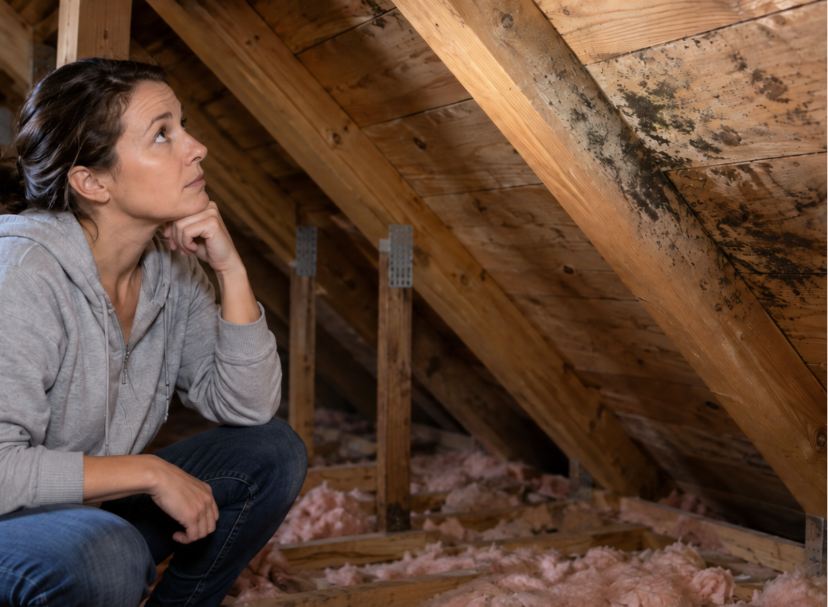
Why Attic Mold Removal Requires More Than Surface Cleaning
Finding mold in your attic can be frustrating, and once you see it, you may wonder whether you can simply clean the affected area yourself. Properly addressing attic mold, however, involves more than removing the visible growth. The full extent of the problem needs to be identified, spores need to be controlled during treatment, and the moisture conditions that allowed mold to develop must also be corrected. Understanding each part of this process can help explain why a DIY approach to attic mold removal may leave important parts of the problem unresolved.
Why Attic Mold Should Be Addressed Promptly
Leaving mold unaddressed gives the growth and underlying moisture problem more time to affect attic materials. Roof decking, rafters, framing, and other organic materials can support mold when they remain damp, while prolonged moisture exposure can contribute to deterioration of the wood itself.
An attic mold problem also has the potential to affect other parts of your home. Airborne spores can move through gaps around recessed light fixtures, attic access points, wiring, plumbing, and other ceiling openings as air pressure and circulation patterns change. The longer the conditions continue, the more materials may become involved, potentially making treatment and repairs more extensive.
The Steps Involved in Proper Attic Mold Removal
Properly resolving an attic mold problem requires a systematic, multi-step process. Effective attic mold removal in Jacksonville, NC, begins with understanding how extensive the growth is and what conditions allowed it to develop.
A thorough remediation process generally includes these key steps:
- Inspection: Assessing the attic to determine the extent of the growth and identify the source of excess moisture, such as a roof leak, condensation, or inadequate ventilation.
- Containment: Isolating the affected area to help limit the movement of spores while mold-affected materials are disturbed and treated.
- Removal: Removing or treating mold on affected building materials using methods appropriate for the surfaces involved.
- Moisture correction: Addressing the leak, humidity, ventilation problem, or other condition contributing to excess moisture.
Each step serves a different purpose. Removing the existing mold without correcting the conditions behind it leaves the attic vulnerable to recurring growth.
Why DIY Attic Mold Removal Can Fall Short
Attempting to clean attic mold yourself can leave parts of the problem unresolved. Growth may extend behind insulation, along framing, or into areas that are difficult to see or reach. The moisture source can also be less obvious than it appears, particularly when water or condensation affects materials away from where the mold is most visible.
Containment presents another challenge. Scrubbing, brushing, or otherwise disturbing mold-affected materials can release additional spores into the air. Without appropriate containment, those particles can move beyond the immediate work area.
There are physical safety considerations as well. Attics often have limited walking surfaces, low-clearance areas, protruding nails, electrical wiring, and extreme temperatures. Stepping between ceiling joists can result in a fall through the drywall below, while working directly around mold without appropriate protective equipment can increase exposure to airborne spores and other particles.
Choose Professional Attic Mold Removal
DIY cleaning may remove some visible growth, but professional remediation provides a more complete approach by addressing the extent of the mold, controlling spores during treatment, and identifying the moisture conditions behind the problem. Those steps help reduce the chance that affected areas or contributing conditions will be overlooked.
Green Home Solutions provides attic mold removal in Jacksonville, NC, with personalized solutions based on the conditions found during your attic inspection. Our trained technicians assess the extent of the growth, establish appropriate containment, treat affected materials, and identify moisture problems that need to be corrected.
If you have found mold in your attic or have reason to suspect it may be present, contact Green Home Solutions today to schedule an inspection or request a quote online.