
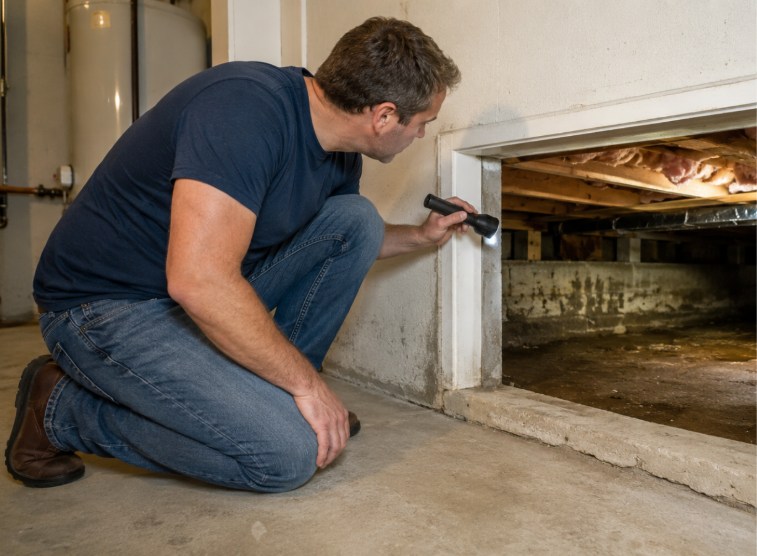
What happens beneath your floors can affect the rest of your home. Mold in your crawl space may develop after flooding, a hidden leak, persistent humidity, or another moisture-related event. Left unaddressed, it can affect wood and other building materials, influence indoor air quality, and spread beyond its original location.
The hidden nature of a crawl space makes professional evaluation especially important. Even if you haven’t seen mold, suspected growth or a recent water intrusion event warrants an inspection. Proper crawl space mold treatment begins with confirming what is present and determining how extensive it is. Thorough removal, correction of the moisture source, and effective prevention strategies can then provide greater confidence that your crawl space and living areas are protected from continued growth.
What Can Cause Crawl Space Mold?
Moisture can enter your crawl space from the ground, outside, or within the area itself. Exposed soil releases ground vapor from below, particularly when no intact vapor barrier is in place. From outside, rainwater may collect near your foundation because of clogged gutters, damaged downspouts, or improper grading. Open vents can also admit humid air that forms condensation on cooler surfaces.
Components beneath your home can create additional moisture. Leaking pipes and drain lines, loose washing machine hoses, and condensation on air-conditioning ducts can all wet nearby materials. A dryer vent terminating in or near your crawl space may introduce additional humidity. If that moisture can’t dry promptly, mold may begin developing.
Why Is Crawl Space Mold a Problem?
A problem that begins beneath your floors may eventually affect the rooms where you spend your time. As warmer air rises through your home, air from the crawl space can be drawn into your living areas. Mold spores and odors may travel with it, potentially affecting indoor air quality and causing respiratory or allergy symptoms in sensitive members of your household.
Mold can also cause damage within the crawl space itself. Mold gradually damages the surfaces where it grows, while the moisture supporting that growth can contribute to wood decay in floor joists and subflooring. Over time, these conditions may lead to warped or sagging floors and create a more inviting environment for pests.
How Is Crawl Space Mold Identified and Removed?
You may have reason to suspect crawl space mold if you notice damp or sagging insulation, condensation, visible patches on structural materials, or an odor that becomes stronger near your floors. These observations provide a reason to investigate, but they can’t confirm mold on their own. A professional crawl space inspection provides a more complete assessment by determining what is present, how much of the area is affected, and which conditions allowed the growth to develop.
The results of that evaluation guide crawl space mold removal in North Shore MA. Depending on the extent of the problem, removing mold from a crawl space may involve containment, surface treatment, controlled removal of damaged materials, and thorough cleaning of the affected area. Professional removal is important because crawl spaces can be difficult to access, and disturbing mold without the proper precautions may release additional spores.
How Can I Prevent Crawl Space Mold?
After crawl space mold removal is complete, prevention measures should address the conditions that allowed the growth to develop. If moisture rises from exposed soil, installing a durable vapor barrier can help block it. Persistent humidity may require a dedicated dehumidifier to maintain ideal levels, while regular inspections can uncover leaking pipes, damaged HVAC drain lines, or foundation water intrusion before materials remain wet long enough to support mold.
Rainwater should also be directed away from your home through proper grading, maintained gutters, and downspouts that extend several feet beyond your foundation. For crawl spaces with ongoing moisture problems, encapsulation may provide additional protection by covering the ground, sealing the perimeter and vents, and limiting the entry of warm, humid outdoor air.
Take the Next Step Toward a Healthier Crawl Space
Resolving crawl space mold requires more than cleaning visible growth. Effective mold removal in a crawl space begins with evaluating the affected area and thoroughly removing the mold. The moisture conditions that allowed it to develop must also be corrected to help prevent the problem from returning.
Green Home Solutions provides crawl space inspections, crawl space mold removal in North Shore MA, and moisture-control solutions based on the conditions beneath your property. If you suspect mold or have recently experienced water intrusion, contact us to schedule an inspection and determine the appropriate next steps for your crawl space.