
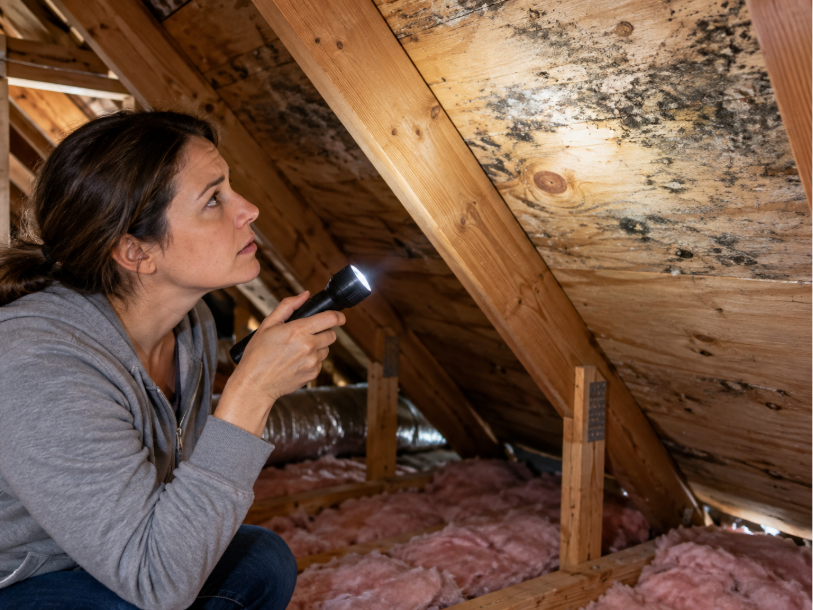
The Conditions That Allow Attic Mold to Develop
Attics contain many materials that mold can grow on, but those materials alone are not enough to create a problem. Mold also needs moisture. Once roof decking, wood framing, insulation facing, or other organic materials remain damp, growth can begin.
Moisture can reach an attic in several ways, from water intrusion to humid air accumulating inside the space. Finding out where it is coming from is an important part of both prevention and remediation. Correcting the moisture condition helps keep an attic from continuing to provide the environment mold needs.
Roof Leaks Can Lead to Mold Growth
Water intrusion through your roof can quickly create the moisture mold needs, although the leak itself may be harder to find than expected. Missing shingles, damaged flashing around chimneys or vents, deteriorated seals, and problems around roof penetrations can all allow water into an attic.
The resulting moisture does not always appear directly beneath the damaged area. Water can move along structural components before collecting elsewhere, leaving roof decking, rafters, insulation, or framing damp enough to support mold. If the leak is minor or only occurs during certain weather conditions, it may remain unnoticed for some time.
Correcting the roofing defect prevents additional water intrusion, but that alone does not remove growth that has already developed. Existing mold still needs to be evaluated and treated as part of resolving the attic problem.
Warm Indoor Air Can Create Attic Condensation
Your attic can develop a moisture problem even when the roof is not leaking. As warm, humid air moves upward through your home, the stack effect can carry some of that air into the attic. When it comes into contact with colder roof decking, framing, nails, or other surfaces, condensation can form.
This is especially common when outdoor temperatures are low and attic surfaces are much cooler than the living space below. Repeated condensation can keep those materials damp over time, creating conditions that support mold. Because moisture may collect across broad areas, the resulting growth can be more widespread than a problem caused by a single point of water intrusion.
Improper Exhaust Ventilation Can Add Attic Moisture
Bathroom and kitchen fans are meant to remove moisture from the home, but they can create the opposite effect when they vent into the attic. Instead of sending humid air outdoors, improperly installed ducts release it around attic materials every time the fan is used.
This type of ventilation problem is not always easy to recognize from inside the home. If your attic is rarely visited, the moisture may continue accumulating for some time before damp materials or mold growth become noticeable.
Indoor Air Can Carry Moisture Into the Attic
Warm, humid air from your living space can reach the attic through openings in the ceiling, including gaps around recessed lights, attic access hatches, plumbing and electrical penetrations, and spaces around ductwork or chimney chases. These openings provide pathways for moisture-containing air to move upward.
How much moisture reaches your attic depends on factors such as indoor humidity levels, temperature differences, pressure changes within the home, and the size and number of air leaks. Identifying where that air is entering is an important part of correcting the moisture conditions that can contribute to attic mold.
Resolve Both the Mold and the Conditions Behind It
Professional attic mold removal in Stamford, CT, should address both the existing growth and the moisture conditions that supported it. Cleaning affected surfaces without correcting the source of excess moisture leaves an important part of the problem unresolved.
A complete process includes evaluating how far the mold extends, identifying the moisture source, containing the affected area, and treating or removing growth from the materials involved. If necessary, damaged components are replaced, while the leak, condensation, ventilation issue, or air leakage contributing to the problem is corrected.
Have Your Attic Mold Properly Evaluated and Treated
Moisture can enter or build up in your attic for several reasons, including roof leaks, humid indoor air moving upward, or exhaust systems that vent into the attic instead of outdoors. Identifying the source is essential because treating mold without correcting the conditions behind it leaves an important part of the problem unresolved.
Green Home Solutions offers attic mold removal in Stamford, CT, with treatment tailored to the growth and moisture conditions present in your home. We assess affected areas, determine what contributed to the mold, contain the work area as appropriate, and treat the materials involved.
Contact us to schedule an attic inspection and get a clear plan for addressing both the existing mold and the moisture that allowed it to develop.