
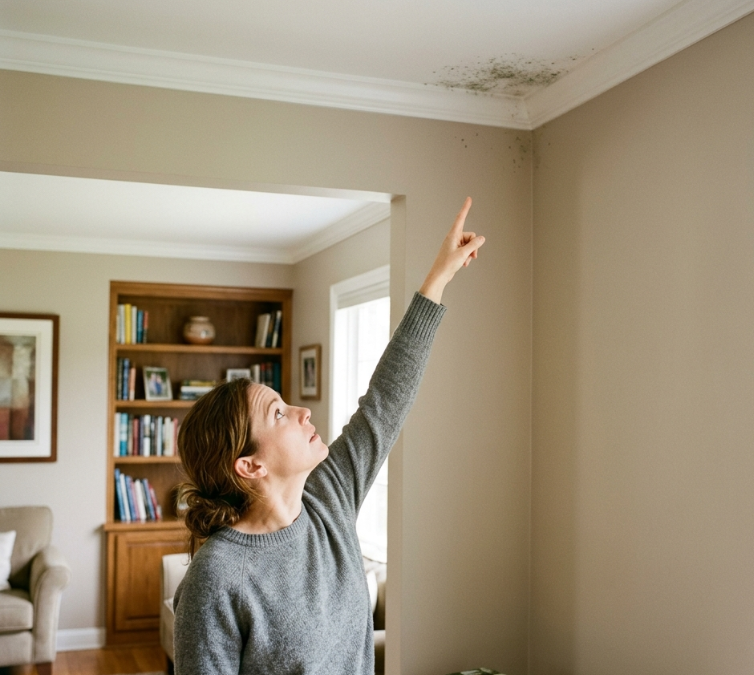
When mold shows up inside a home, most people focus on the visible growth. What often gets less attention is the part of the home that allowed moisture to remain present in the first place. Long before mold appears on a wall, ceiling, or other surface, something within the structure is usually creating an environment where moisture can persist.
Mold requires several conditions to grow, including moisture, moderate temperatures, organic materials that can serve as a food source, and enough time for dampness to remain undisturbed. Certain components of a home’s construction can make it easier for those conditions to come together. Looking at the home itself can help uncover vulnerabilities that might otherwise go unnoticed and reveal when mold testing in Sterling, VA, may be worth considering.
The Condition of Your Roof and Exterior
Every home depends on its exterior to keep moisture where it belongs. Roofing materials, siding, flashing, windows, doors, and foundation elements all work together to prevent water from reaching the interior structure.
The challenge is that these systems gradually age. Sealants dry out, flashing shifts, roofing materials wear down, and small openings develop. Water does not need a large entry point to become a problem. Repeated exposure from a minor vulnerability can affect framing, insulation, and wall materials for a long time before any visible signs appear indoors.
Because these areas are designed to keep water out, problems often remain hidden until moisture has already been present for an extended period.
How Plumbing Issues Create Risk
Unlike weather-related moisture, plumbing problems originate from inside the home itself. Water supply lines, drain pipes, appliance connections, and fixtures are distributed throughout the structure, placing potential moisture sources in locations homeowners rarely see.
A slow leak is often more problematic than a dramatic one because it attracts less attention. A small amount of water released day after day can gradually affect surrounding materials without creating an obvious emergency. Cabinets, wall cavities, flooring systems, and utility areas can all be impacted before anyone realizes moisture is present.
The more concealed the plumbing, the easier it becomes for a developing issue to escape notice.
Building Materials That Hold Moisture
Some building materials recover from moisture exposure more quickly than others. Tile, metal, and certain finished surfaces tend to shed water relatively well. Other materials behave differently.
Drywall, wood framing, insulation, and subflooring can absorb moisture beneath the surface. Once dampness reaches these materials, drying becomes a much slower process, particularly when airflow is limited. In some situations, the surrounding area may appear completely normal while moisture remains trapped inside the material itself.
This is one reason mold can continue developing even after a leak seems to have been resolved.
Why Basements and Crawl Spaces Are Different
Not every part of a home experiences moisture in the same way. Basements and crawl spaces face conditions that the rest of the structure does not.
Their proximity to the ground exposes them to ongoing soil moisture, and they often receive less natural airflow than occupied living areas. Temperature differences can also contribute to damp conditions, especially where cooler surfaces encounter warmer, more humid air.
These spaces frequently contain exposed framing, insulation, and utility systems, creating an environment where moisture can linger without drawing much attention. Since most homeowners spend very little time in these areas, developing problems may continue for quite a while before they are discovered.
When Mold Testing Makes Sense
A home’s ability to manage moisture depends on many different structural components working as intended. When an exterior vulnerability, plumbing issue, moisture-retaining material, or below-grade space allows dampness to persist, mold becomes more likely to develop.
If you have concerns about mold in your home, Green Home Solutions offers inspections and mold testing in Sterling, VA, to help identify where moisture may be accumulating and whether mold is already present. Our team can evaluate the conditions contributing to the problem and help you better understand what is happening within your home’s structure. Contact us today to schedule an inspection.