
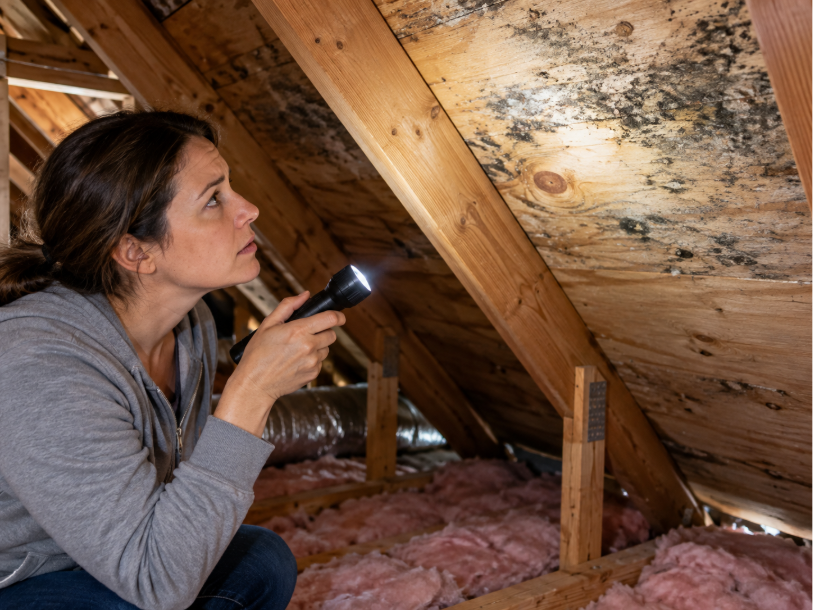
Common Hidden Moisture Issues That Lead to Attic Mold
Most homeowners do not spend much time in their attic, which makes it an easy place for hidden problems to develop. Because this space is out of sight, mold can easily form and spread for months before anyone notices a musty smell or sees dark stains on the wood framing.
Mold can’t grow without moisture. When it develops in an attic, that moisture is typically entering from outside or building up within the space. Understanding what causes this moisture to build up is the first step toward keeping your home clean and dry.
Poor or Blocked Attic Ventilation
One of the most frequent causes of attic mold is inadequate airflow. An attic needs proper ventilation to allow air to circulate smoothly. This usually involves a system of soffit vents near the roof edge to pull fresh air in, and ridge or gable vents near the top to let hot air escape. If insulation accidentally covers the lower soffit vents, or if the upper vents are blocked, air gets trapped. In a closed attic, moisture has nowhere to go and settles directly on the wooden roof boards and rafters, creating a prime habitat for mold to grow.
Roof Leaks from Storms or Aging Shingles
An active roof leak is a direct way for moisture to enter your attic. Damaged or missing shingles, cracked flashing around chimneys, and worn rubber boots around ventilation pipes can all allow rainwater to seep inside. Sometimes these leaks are very small and slow, meaning water drips onto the attic insulation or runs down a rafter rather than pooling on your ceiling below. This hidden dampness keeps the attic wood constantly wet, which triggers localized mold outbreaks that can quickly spread to surrounding building materials.
Bathroom and Kitchen Exhaust Fans Venting Internally
Exhaust fans are designed to pull hot, humid air out of your bathrooms and kitchen. A common construction mistake is running the exhaust duct straight into the attic space rather than extending it all the way through the roof to the outdoors. Every time you take a hot shower or cook a meal, the fan dumps gallons of warm, moisture-heavy air directly into the dark attic. This humid air rapidly turns into condensation when it hits the cool underside of your roof deck, creating a major mold issue over time.
Condensation from Warm Air Rising from Below
Even without a roof leak or a misplaced exhaust fan, normal daily activities can cause attic condensation. Because warm air naturally rises, the heat from your living rooms, showers, and appliances constantly moves upward toward the ceiling. If your attic floor does not have a proper vapor barrier or sufficient insulation, this warm, moist air slips through small gaps around ceiling lights and attic access doors. When that humid air enters a cold winter attic, it instantly turns into water droplets on the cold wood and nails, fueling mold growth.
How to Correct Attic Moisture and Mold Problems
Fixing an attic mold problem requires addressing both the existing growth and the moisture conditions that allowed it to develop. Surface cleaning alone won’t resolve the issue if a roof leak, ventilation problem, condensation, or another source of excess moisture remains. Professional attic mold removal in Andover, MA, can address the affected materials while also identifying the conditions contributing to the growth so the appropriate corrections can be made.
Address Attic Mold Before the Problem Grows
Leaving excess moisture unresolved can allow mold to spread across additional attic materials and can contribute to deterioration of roof decking, rafters, framing, and insulation over time. Addressing the moisture source and existing growth promptly can help limit how much of the attic becomes affected and reduce the need for more extensive remediation or repairs later.
Green Home Solutions develops treatment plans based on the conditions found in your attic. Our technicians assess the extent of the growth, identify contributing moisture problems, establish appropriate containment, and treat affected materials using methods suited to the surfaces involved. We also help identify the ventilation, condensation, leak, or other moisture issue that needs to be corrected as part of a complete solution.
If you’ve found mold, staining, or persistent moisture in your attic, contact us today to schedule attic mold removal in Andover, MA, and get clear recommendations for addressing both the growth and the conditions behind it.