
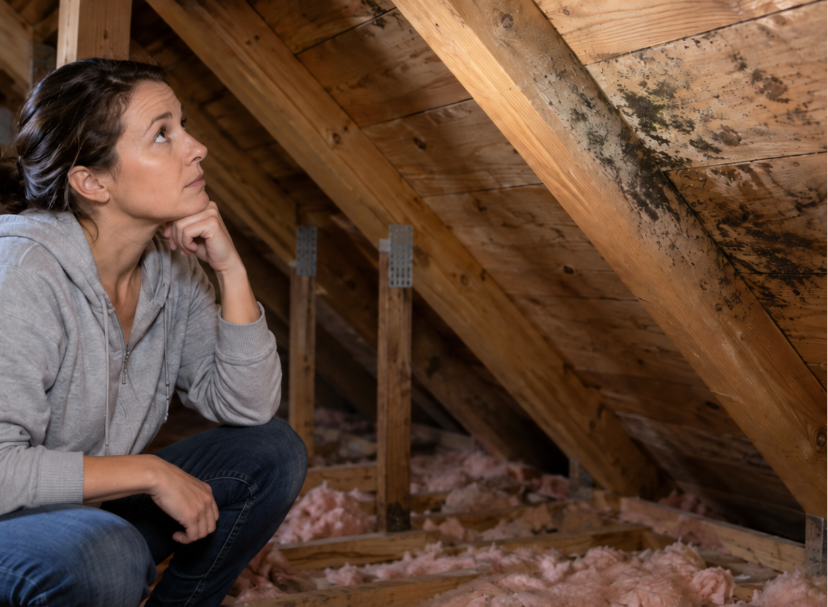
The Mold You See May Not Be the Whole Problem
When you find attic mold that appears limited to one small area, a surface cleaning may seem like enough to resolve it. The visible growth, however, may be only one part of a larger moisture problem that needs to be identified and corrected.
Warm, humid air rising from your living space can condense on cooler attic surfaces, while roof leaks, poor ventilation, or improperly vented exhaust fans can introduce additional moisture. These damp conditions can support growth across roof sheathing, rafters, insulation, and other materials. Because mold may extend into areas that are difficult to see, the size of the visible patch doesn’t always reflect the full extent of the problem.
What Happens When Attic Mold Is Not Addressed
When attic mold is allowed to remain, the affected area can expand across materials that stay damp enough to support growth. Wooden roof sheathing, rafters, and framing are particularly vulnerable to prolonged moisture exposure, which can contribute to deterioration. Insulation may also become damp, compressed, or less effective depending on the extent of the moisture problem.
Mold spores released into the attic air can also travel beyond the original growth area. Openings in the ceiling, attic hatches, and leaks in HVAC ductwork can provide pathways into the rest of your home. Treating the problem sooner can help limit how far the growth spreads across attic materials and reduce the chance that more extensive remediation or repairs will be needed later.
What Proper Attic Mold Treatment Involves
Professional attic mold removal in Flemington, NJ, involves more than cleaning the surfaces where growth is visible. The process begins with an assessment of the attic to locate affected areas and determine what moisture conditions contributed to the mold.
Once the scope of the problem is clear, containment is established to limit the movement of spores during treatment. Mold can then be removed or treated on affected materials, with damaged insulation, drywall, or other components replaced when necessary. The leak, ventilation issue, condensation problem, or other source of excess moisture also needs to be corrected. Treating the mold without resolving that cause provides only a partial solution.
Where a DIY Approach Can Fall Short
Attic mold can involve more than the areas that are easiest to see and reach. Hidden growth may remain behind insulation or on less accessible framing, while the moisture problem that caused it may require closer evaluation to identify. Without finding and correcting that source, removing visible mold addresses only part of the issue.
Proper containment can also be difficult to establish without the right materials and equipment. Different surfaces and levels of mold growth may require different treatment approaches, making a one-size-fits-all DIY cleanup unreliable. A clean-looking attic afterward doesn’t necessarily mean every affected area or contributing condition has been addressed.
The Physical and Exposure Risks of DIY Attic Mold Removal
Working inside an attic can involve several physical hazards. Narrow access points, limited footing, low rooflines, sharp nails, electrical components, and insulation can make even basic movement difficult. Extreme heat in summer or cold in winter can add another challenge, particularly during a project that requires extended time in the space.
Handling mold yourself also creates exposure risks. Scrubbing, cutting, moving insulation, or otherwise disturbing affected materials can release spores into the surrounding air. These particles can irritate the eyes, skin, or respiratory system, especially without the protective equipment typically used during professional remediation.
How Professionals Approach Attic Mold Remediation
Professional attic mold remediation begins with a thorough assessment of the affected areas and the moisture conditions that allowed the growth to develop. An experienced technician can inspect less obvious areas, determine how far the mold extends, and develop a treatment plan based on the materials involved and the conditions found.
Equally important, appropriate containment helps limit the spread of spores while remediation is underway. Mold is then removed or treated using methods suited to the affected materials, and the moisture source is identified so the conditions that supported the growth can also be corrected.
Choose the Right Help for Your Attic Mold Problem
Removing attic mold properly requires identifying all affected areas, controlling spores during treatment, and correcting the moisture conditions that allowed the growth to develop. These steps can be difficult to complete with a DIY approach, particularly when mold or its underlying cause isn’t immediately visible.
Green Home Solutions offers attic mold removal in Flemington, NJ, with personalized treatment based on what we find during your attic evaluation. Our team can determine the scope of the problem, contain and treat affected areas, and identify the moisture issue that needs to be corrected. Contact us to schedule an attic inspection and get clear recommendations for addressing the mold in your home.