
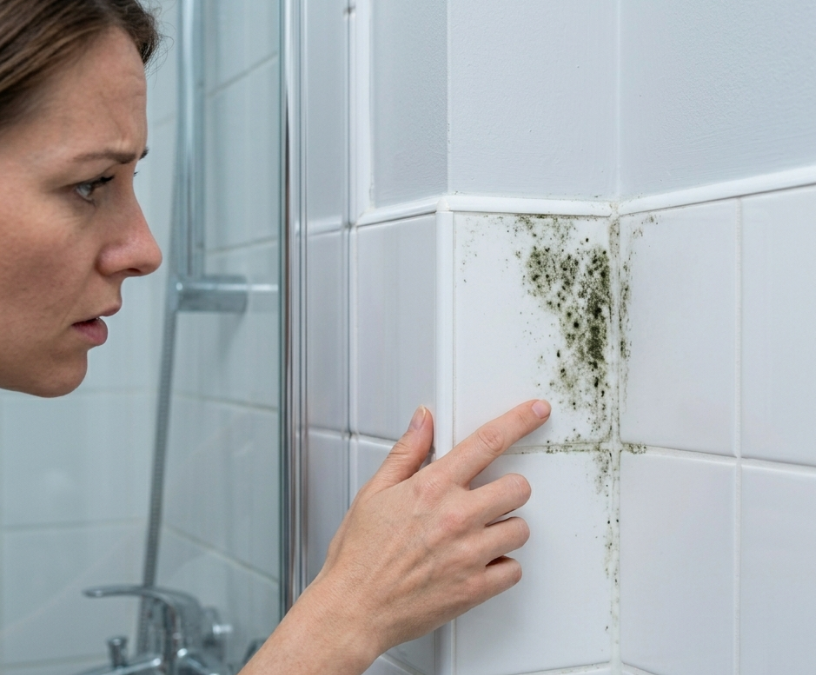
If you’ve ever wondered why mold shows up in one corner of a room and never spreads to the rest of the house, the answer has less to do with luck and more to do with environment. Mold is selective. It needs specific conditions in place before it can establish itself, and those conditions tend to cluster in particular spots rather than spreading evenly throughout a home.
Moisture is the central ingredient in mold development, but it rarely acts alone. Humidity, restricted airflow, temperature shifts, and repeated exposure to water all influence whether mold has an opportunity to take hold in a particular area. These factors can help explain why mold develops where it does and why homeowners sometimes pursue mold testing in Charleston, SC, even when no obvious source of moisture is immediately apparent.
Moisture in the Air
Indoor humidity rises and falls throughout the day depending on what’s happening in the home. A shower running, a pot boiling on the stove, a dryer venting improperly. All of these activities push water vapor into the air, and that vapor has to land somewhere if it isn’t carried out of the home efficiently.
Rooms with frequent water use, particularly bathrooms and kitchens, are often affected most by this added moisture. When humidity remains elevated for extended periods, surfaces throughout these areas can stay damp enough to support mold growth.
Stagnant Air and Its Effects
Air circulation plays an important role in how quickly moisture leaves a surface. When air movement is limited, dampness tends to linger longer than it otherwise would. This is why certain parts of a home can remain vulnerable to moisture even when there is no obvious problem with the room itself. Closets packed with belongings, areas behind large pieces of furniture, and guest rooms that stay closed for long stretches often experience less airflow than the rest of the home.
These spaces are not inherently more susceptible to mold, but reduced circulation can make it more difficult for moisture to dissipate once it arrives. If humidity, condensation, or another moisture source affects one of these areas, surfaces may remain damp longer than they would in a more open, well-ventilated space. That additional drying time can create conditions that are more favorable to mold growth.
Condensation From Temperature Shifts
Not all moisture comes from an obvious source like a spill or a leak. Sometimes it forms directly out of the air because of a temperature difference between surfaces. When warm, humid air comes into contact with something cooler, moisture can collect on that surface as condensation.
This commonly occurs on window glass during colder weather, on uninsulated pipes running through cooler areas of a home, and on certain HVAC components. Because condensation often returns to the same locations under the same conditions, nearby materials may be exposed to moisture on a regular basis. That repeated exposure can leave surrounding surfaces damp more often than homeowners realize, even when there is no obvious water intrusion anywhere nearby.
When Small Amounts of Moisture Add Up
A single drop of water on a surface isn’t going to cause a mold problem. The issue arises when that same surface gets wet repeatedly, without enough time in between to dry completely. A bathroom ceiling exposed to daily steam, a window sill that collects condensation throughout the winter, or the wall behind a sink that gets splashed regularly may never seem particularly wet at any given moment.
What matters is the cumulative effect. When moisture returns to the same area again and again, surfaces can remain damp far more often than homeowners realize. Those repeated exposures create the kind of sustained moisture that allows mold to become established.
Get Ahead of the Conditions That Cause Mold
By the time mold becomes visible, the conditions that support its growth have often been present for quite some time. Identifying those underlying conditions is an important part of effectively addressing mold risk. Treating visible growth without addressing the humidity, airflow issues, condensation, or other moisture sources behind it can leave the same conditions in place.
Evaluating where these conditions exist within a home can help reduce the likelihood of future mold problems and provide valuable context when mold is already present. If you’re noticing signs of excess moisture or have questions about mold activity in your home, Green Home Solutions can help. We offer mold testing in Charleston, SC, along with inspections to identify the specific conditions contributing to a problem, as well as remediation and removal services when mold is present.
Contact our team today to schedule an assessment.