
How Airflow, Spores, and Moisture Connect Your Attic to Your Living Space
A problem doesn’t have to be visible from your living space to affect the rest of your home. Mold can develop in an attic for some time before you notice anything below, especially when the moisture supporting it comes from a slow roof leak, condensation, or another condition that isn’t immediately obvious.
Even though your attic is physically separated from the rooms beneath it, it shares airflow pathways and structural materials with the rest of your home. Mold spores can move beyond the area where growth began, and persistent moisture can affect important building materials as well. Understanding those connections helps explain why attic mold shouldn’t be treated as a problem that will simply remain out of sight.
Air Movement Connects Your Attic to the Rooms Below
Air inside your home is constantly moving in response to differences in temperature and pressure. The stack effect typically carries warm air upward through your home, where it can enter the attic through openings around wiring, plumbing, recessed lighting, attic hatches, and other ceiling penetrations. Those same openings can allow air to move in the opposite direction when pressure conditions change.
A drop in temperature, changes in wind pressure, exhaust systems, and whole-house fans can all affect how air travels between different areas of your home. As a result, attic air can mix with the air in your living spaces rather than remaining completely isolated above the ceiling.
Your HVAC system can create another connection. When heating and cooling equipment or ductwork runs through your attic, gaps or leaks in the ducts can allow attic air to enter the system. Once that happens, airborne particles from the attic can be carried to rooms throughout your home as conditioned air circulates.
Mold Spores Can Travel Beyond the Original Growth
Mold spores are naturally present throughout your indoor environment, but growth begins when those spores land on a suitable material and have enough moisture to develop. In an attic, roof sheathing, rafters, framing, paper-faced insulation, and accumulated dust can all provide organic material where mold can become established.
Once mold is actively growing, additional spores can become airborne. Air movement through your attic, HVAC operation, or even activity in the attic can disturb those spores and carry them through openings leading to other parts of your home.
A spore reaching another room doesn’t automatically create a second mold problem. New growth still requires sufficient moisture. However, if spores reach a damp ceiling, wall cavity, HVAC component, or another area with an existing moisture problem, they can encounter the conditions needed to establish growth somewhere beyond the attic. Musty odors and airborne spores can also affect living areas even when new mold growth hasn’t developed there.
Persistent Attic Mold Can Affect Important Building Materials
An attic mold problem can have consequences for more than your indoor air. The same moisture that allows mold to grow can remain in contact with roof sheathing, rafters, trusses, insulation, and other materials for extended periods.
Mold commonly grows on wood and other organic materials found throughout an attic. When wooden components remain damp, prolonged moisture exposure can contribute to deterioration and decay. Roof sheathing may begin to lose strength, framing can become damaged, and insulation exposed to excess moisture can become compressed, contaminated, or less effective.
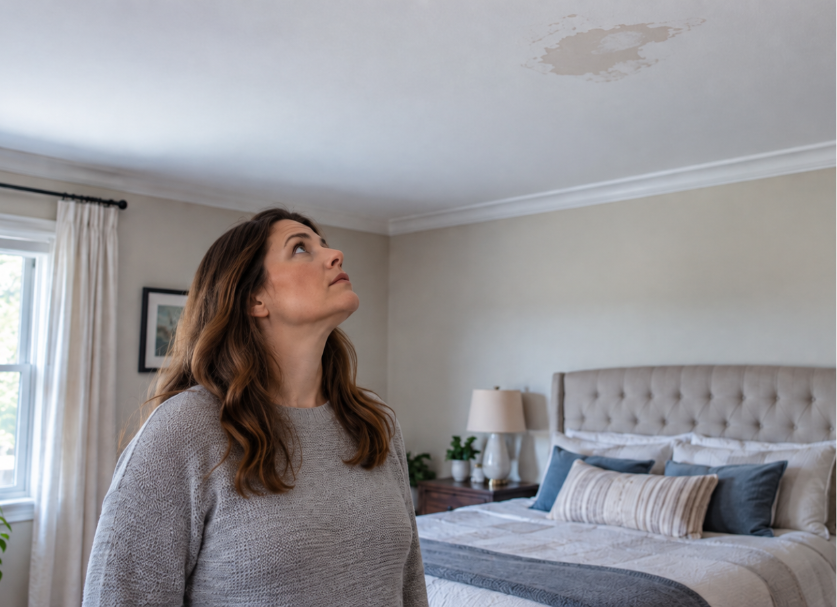
These changes usually become more serious when the underlying moisture problem continues. Growth that begins on a limited section of roof decking can spread across additional surfaces, while ongoing dampness gives building materials more time to deteriorate. By the time visible effects appear in the rooms below, such as ceiling staining or moisture damage, your attic problem may already be considerably more extensive.
Resolve Both the Mold and the Conditions Behind It
Successful attic mold removal in Myrtle Beach, SC, needs to address two connected parts of the problem: the mold that has already developed and the moisture conditions supporting it. Removing visible growth without determining why your attic became damp can leave the same environment in place for mold to return.
The process begins with a detailed inspection of your attic and an evaluation of moisture conditions. Moisture-detection equipment may be used to locate damp areas and help determine whether the problem involves a roof leak, condensation, ventilation, improperly vented exhaust, or another source. Mold or air quality testing may also be appropriate when additional information is needed about the extent of the problem.
Once the affected areas and contributing conditions are understood, containment helps limit the movement of spores during treatment. Existing mold is then removed from affected materials, with damaged materials addressed as necessary. The moisture source must also be corrected, whether that requires repairing a leak, improving ventilation, redirecting an exhaust fan, or making another change based on the conditions found. Post-remediation verification may be recommended when appropriate to confirm that treatment has been successful.
Treating the growth and correcting the cause work together. Without both, part of the attic mold problem will remain unresolved.
Address Attic Mold Before Its Effects Reach Further
Mold developing above your ceiling doesn’t exist independently from the rest of your home. Changing air pressure can move attic air into living areas, spores can travel beyond the surfaces where growth began, and prolonged moisture can affect the materials that insulate and support your roof. Addressing the problem before those effects become more extensive can help limit both mold growth and property damage.
Green Home Solutions provides attic mold removal in Myrtle Beach, SC, with personalized solutions based on what we find in your attic. We evaluate the extent of the mold, determine which conditions are contributing to excess moisture, remove the existing growth, and recommend the appropriate corrections for your home.
If you’ve discovered attic mold or have reason to suspect a problem above your living space, contact Green Home Solutions to schedule an inspection or request a quote online.