
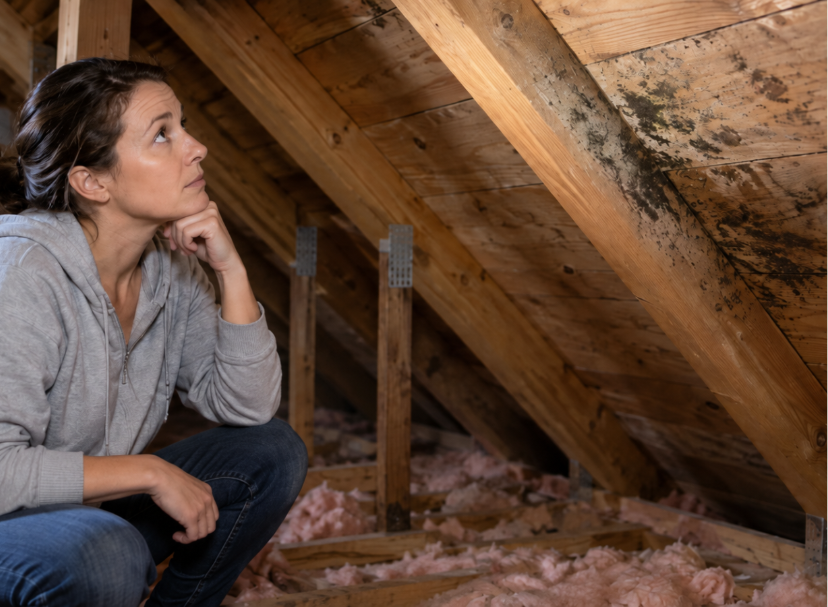
Understanding the Full Process Behind Attic Mold Removal
If you find attic mold that appears limited to a small patch on framing or insulation, it may look like a problem that can be resolved by cleaning the visible area. That appearance can be misleading, however. Attic mold treatment is a multi-step process that goes well beyond surface cleaning.
The full problem needs to be evaluated, including how far the mold has spread and what moisture condition allowed it to grow in the first place. The affected area must also be contained during treatment, existing growth needs to be addressed appropriately, and the moisture source has to be corrected.
Professionals understand how these steps work together and have the equipment and experience needed to complete the process more thoroughly.
The Risks of Leaving Attic Mold Unresolved
An attic mold problem can affect building materials, insulation, and indoor air if it is allowed to continue. Ongoing moisture can contribute to deterioration of wooden components, while damp insulation may lose effectiveness. Mold spores can also travel with moving air through ceiling openings or ductwork, giving an attic problem a pathway into other parts of your home. As more materials become involved, remediation can also become more extensive.
How the Full Problem Is Addressed
Resolving attic mold requires more than cleaning the areas where growth is visible. The attic first needs to be evaluated to determine the full extent of the mold and identify what caused the moisture problem. The affected area is then contained, mold is treated or removed from the materials involved, and damaged components are replaced when necessary. Correcting the leak, ventilation problem, condensation, or other moisture source completes the process and helps reduce the likelihood of recurring growth.
What DIY Attic Mold Removal Can Miss
Cleaning the areas where mold is visible doesn’t necessarily mean the full problem has been resolved. Most homeowners don’t have the training or equipment needed to locate less obvious growth, identify the moisture source, or determine which materials require treatment or replacement.
Proper attic mold removal in Greensboro, NC, also includes containing the affected area during treatment. If containment is inadequate, disturbed spores can move into other parts of the attic or home rather than remaining limited to the work area.
The Safety Challenges of Attic Mold Removal
Attics can be cramped, difficult to navigate, and filled with potential hazards such as protruding nails, electrical wiring, insulation, and narrow joists. Extreme heat or cold can make the environment even more difficult to work in.
There are also exposure risks when mold-affected materials are disturbed. Without appropriate protective equipment, airborne spores and other particles can irritate the eyes, skin, or respiratory system and may worsen allergy or asthma symptoms in sensitive individuals.
Get Expert Help for Removing Attic Mold
Cleaning the mold you can see doesn’t necessarily address everything happening in your attic. Complete treatment requires understanding how far the growth extends, preventing spores from spreading during remediation, treating the materials involved, and correcting the conditions that allowed mold to develop. A professional team is better equipped to address each part of the process.
Green Home Solutions provides attic mold removal in Greensboro, NC, with solutions developed around the specific conditions found in your attic. We can assess the extent of the growth, identify the source of excess moisture, contain the affected area, and provide the appropriate treatment.
Contact us today to schedule an attic inspection and begin addressing the mold and moisture conditions in your home.