
How Moisture, Airflow, and Hidden Growth Connect Your Attic to Your Living Space
Your attic may be out of sight during everyday life, but conditions there can have consequences throughout your home. Mold growing above your ceiling can affect indoor air quality, insulation, roof decking, and other materials, particularly when the moisture problem supporting the growth continues.
Because your attic is connected to the rest of your home through airflow and numerous small openings, mold growth does not necessarily remain isolated there. Understanding how the problem develops and how it can affect the rooms below can help you recognize when your attic needs attention.
Why Attics Are Prone to Mold Growth
Attics often contain several of the conditions mold needs to grow. Wood framing and roof sheathing provide organic material, while moisture can enter or accumulate in a number of ways.
Warm, moisture-filled air naturally rises from your living spaces. When it reaches cooler surfaces in the attic, such as the underside of the roof deck, condensation can form. If those materials remain damp, mold has an opportunity to develop. Other moisture problems can contribute as well. Poor attic ventilation can prevent humid air from escaping, while roof leaks can introduce water directly. Bathroom or kitchen exhaust fans that terminate in the attic instead of venting outdoors can repeatedly release warm, humid air into the space.
In some homes, several of these conditions may be contributing at the same time.
How Mold Above Your Ceiling Can Reach Other Areas
Although your attic and living spaces are physically separated, they are still part of the same building and air can move between them. Openings around recessed lights, wiring, plumbing, ductwork, attic access points, and other ceiling penetrations can create pathways between the two areas.
As warm air rises through your home, it can travel through these openings and into the attic. Changes in air pressure, HVAC operation, and other airflow patterns can also allow attic air and airborne particles to move through those same pathways. If mold is growing above your ceiling, spores and musty odors can therefore reach areas where you spend your time.
Signs that an attic mold problem may be affecting other parts of your home can include:
- Musty odors on the upper floor
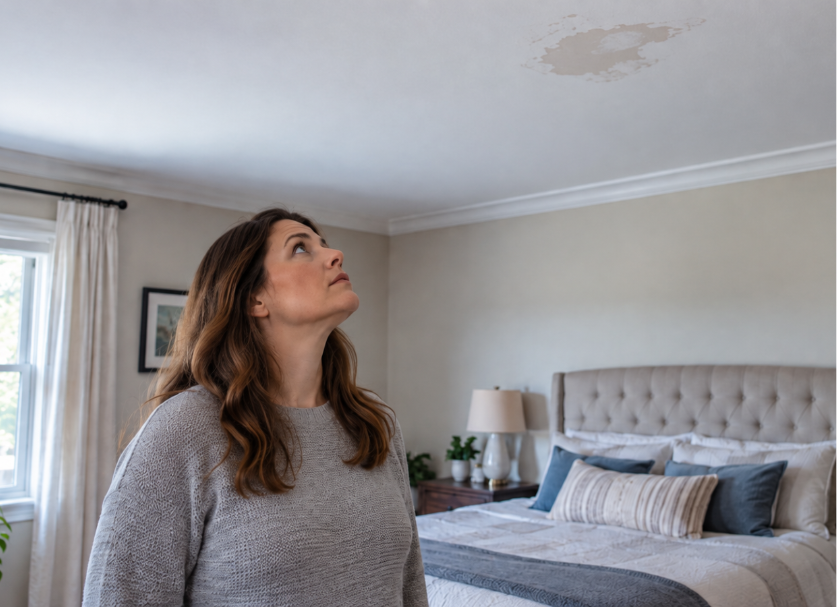
- Staining or moisture marks on ceilings
- Recurring condensation or excess humidity
- Allergy or respiratory symptoms that worsen indoors
- Mold or moisture around attic access points
- Visible water damage below the attic
These signs don’t necessarily mean attic mold is responsible, but they can indicate that conditions above your living space warrant a closer look.
Why Attic Mold Should Not Be Left Unaddressed
Attic mold can create both indoor air quality and property concerns. Airborne spores can contribute to allergy symptoms, coughing, irritation, and worsened asthma, particularly for people who are sensitive to mold.
The moisture supporting the growth can affect your home itself as well. Damp insulation may lose effectiveness, while prolonged moisture and mold growth can contribute to deterioration of roof sheathing, rafters, and other wooden components.
The longer favorable conditions remain in place, the more opportunity mold has to spread across additional materials. A problem that initially affects a limited area can become more involved to treat, potentially increasing the extent of remediation, removal, or repair needed.
How Professional Attic Mold Treatment Addresses the Problem
Effective attic mold removal in Morgantown, WV, requires understanding both the extent of the growth and the conditions that allowed it to develop. A professional treatment process may include:
- Inspecting the attic and identifying moisture sources
- Containing affected areas
- Removing mold from affected materials
- Correcting leaks, ventilation, or moisture problems
- Completing post-remediation testing when appropriate
Together, these steps address both the existing mold and the conditions that allowed it to develop. Correcting these conditions is essential to reducing the chance of the problem returning after removal.
Address Attic Mold Before It Affects More of Your Home
Don’t assume that mold above your ceiling will stay separate from the rest of your home. Air can move between your attic and living areas, while the moisture supporting mold growth can affect insulation, roof decking, framing, and other materials if the problem continues.
Green Home Solutions provides attic mold removal in Morgantown, WV, with personalized solutions based on the conditions we find in your attic. We identify the extent of the growth, determine what is contributing to excess moisture, remove the mold, and recommend the appropriate corrections to help create conditions that are less favorable for future growth.
If you have found mold in your attic or noticed signs that could point to a moisture problem above your living space, contact Green Home Solutions to schedule an inspection or request a quote online.