
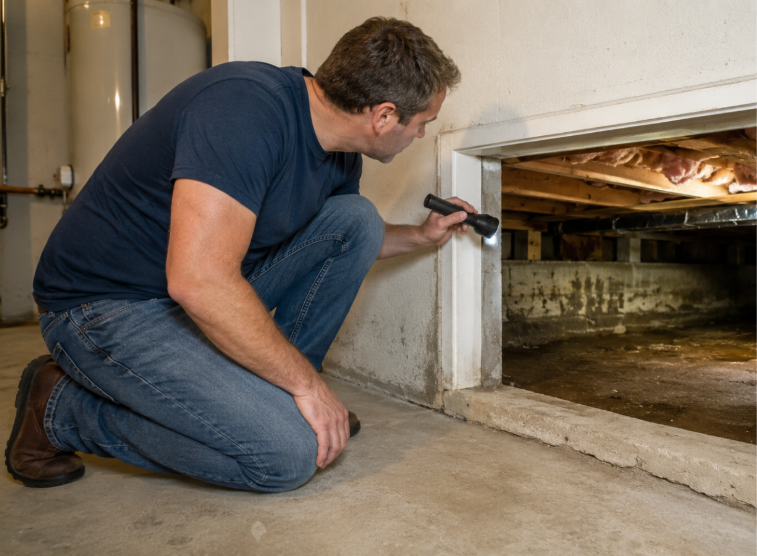
Mold can begin growing in your crawl space well before you realize there’s a problem. Because this area is largely removed from your everyday living spaces, excess moisture can persist and mold can develop on wood, insulation, and other materials without being noticed. Over time, the problem can spread beyond the crawl space, although musty odors, elevated humidity, and other changes in your home can provide earlier warning signs.
Crawl space mold can develop for several reasons, but they generally have one factor in common: excess moisture. Effective crawl space mold treatment addresses the existing growth as well as the conditions that allowed it to develop. Understanding where that moisture comes from and how mold is removed can help you recognize when your crawl space needs professional attention.
What Can Cause Crawl Space Mold?
Your crawl space is particularly vulnerable to moisture because of its location beneath your home. Water can enter from several directions, and limited airflow can make it difficult for damp materials to dry once they become wet.
Plumbing leaks are one possible source, especially when pipes run through the crawl space and a slow leak continues unnoticed. Rainwater can also contribute when damaged or clogged gutters direct water toward your foundation, drainage around your home is inadequate, or groundwater enters the space. In humid conditions, moisture in the air can condense on cooler surfaces and keep wood and other materials damp.
Ventilation and insulation problems can compound these conditions. When moisture continues to collect faster than it can dry, the wood, paper backing, and other organic materials commonly found beneath your home can provide a suitable surface for mold growth.
Why Is Crawl Space Mold a Problem?
Mold growing beneath your home isn’t necessarily isolated from the rooms where you spend your time. Through the stack effect, warm air rising inside your home draws air upward from lower areas, including your crawl space. Mold spores, moisture, odors, and other airborne substances can travel with that air into your living spaces.
Continued moisture and mold growth can also affect the materials that make up your home. Floor joists, subflooring, insulation, and other components can remain exposed to damp conditions, potentially leading to deterioration over time. You may eventually notice warning signs upstairs, including musty odors, increased humidity, or flooring that begins to warp or sag.
For people who are sensitive to mold, exposure can also cause allergy-like symptoms and aggravate asthma. Addressing the problem helps limit continued exposure while preventing mold from spreading to additional areas.
How Is Crawl Space Mold Identified and Removed?
Before treatment begins, a professional crawl space inspection can determine whether mold is present and identify moisture conditions that are contributing to the problem. Mold and air quality testing may also be used to better understand the extent of the growth and whether mold spores are affecting the air inside your home.
Once the problem has been evaluated, professional crawl space mold removal in Raleigh, NC, can address affected surfaces throughout the area. Removing mold from a crawl space requires more than treating the growth that’s easiest to see. Mold can develop in difficult-to-access areas and across multiple materials, which is why DIY treatments can leave portions of the problem behind.
The moisture source also needs to be corrected as part of a long-term solution. Depending on the conditions beneath your home, that could involve repairing a leak, improving drainage, controlling humidity, or addressing another source of excess moisture. Crawl space encapsulation may also be recommended to create a barrier between the crawl space and outside moisture.
How Can I Prevent Crawl Space Mold?
Moisture control is the foundation of crawl space mold prevention. Start by keeping water away from your foundation with properly functioning gutters, downspouts, and exterior drainage. Plumbing leaks should be repaired promptly, and persistent dampness or elevated humidity beneath your home should be investigated rather than allowed to continue.
Pay attention to changes elsewhere in your home as well. A new musty odor, unexplained increases in indoor humidity, or changes to your flooring can indicate that conditions beneath your home have changed. Periodic professional inspections can also identify moisture problems that aren’t apparent from your living areas.
If you’ve previously needed mold removal in crawl spaces, prevention becomes especially important. Correcting the original moisture source and following any recommendations for ongoing moisture control can help prevent the same conditions from developing again.
Address Crawl Space Mold at Its Source
A crawl space may be out of your daily view, but the conditions beneath your home can affect the structure and indoor environment above it. When excess moisture leads to mold, treating the growth without addressing why it developed leaves an important part of the problem unresolved.
Green Home Solutions provides crawl space mold removal in Raleigh, NC, with solutions based on the specific conditions beneath your home. We can inspect your crawl space, identify mold and contributing moisture problems, and recommend an appropriate treatment plan.
If you’ve noticed signs of mold or moisture beneath your home, contact Green Home Solutions today to find the right crawl space mold solution for your property.