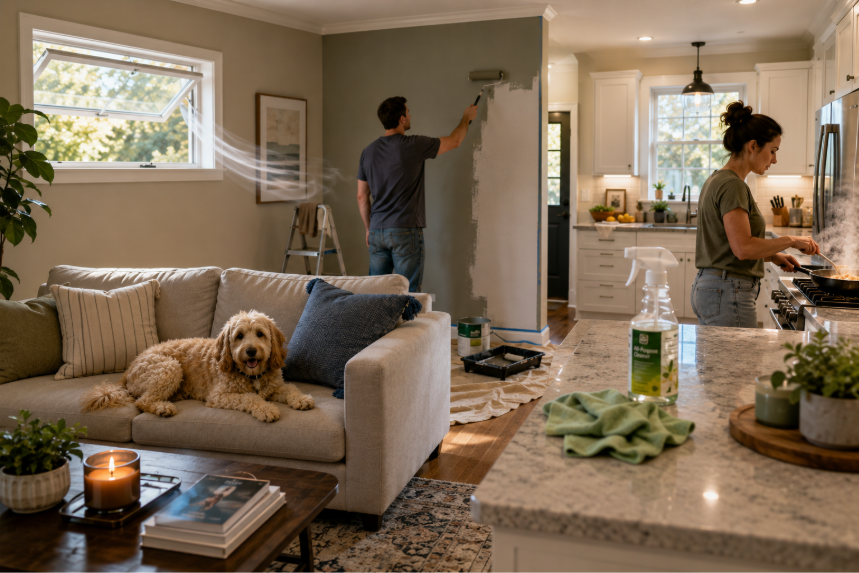
Many of the things that affect your indoor air are part of everyday life. Cooking meals, taking showers, using household products, or simply opening a window can all influence the air inside your home. Other issues, such as excess moisture or hidden mold growth, can develop over time without attracting much attention.
Knowing which indoor air quality problems are most common can help you better understand what may be affecting your home and what you can do to reduce those issues before they become more significant.
Airborne Particles Have Many Sources
Not every airborne particle inside your home originates from the same place. Some, such as pollen, enter from outdoors through open windows, doors, or clothing. Others, including pet dander, dust, and fine particles from everyday household activities, are generated inside your home.
While regular cleaning, effective filtration, and good ventilation can help reduce these pollutants, they don’t always eliminate them completely. When airborne particles continue to accumulate despite consistent maintenance, it can indicate that additional factors are affecting your indoor air quality.
High Humidity Can Affect More Than Comfort
Humidity influences more than how your home feels. When indoor moisture remains elevated for long periods, it creates conditions that can affect indoor air quality by encouraging mold growth and allowing damp materials to stay wet longer than they should.
Moisture can come from everyday activities, such as cooking and showering, or from larger issues like plumbing leaks or water intrusion. Keeping humidity under control, improving ventilation, and addressing water problems promptly can help prevent moisture from leading to more significant indoor air quality issues.
Chemical Pollutants Can Build Up Indoors
Not all indoor air pollutants come from dust or moisture. Many originate from products that are used regularly throughout your home. Cleaning supplies, fresh paint, sealants, scented products, and some building materials can all release volatile organic compounds (VOCs) that become part of your indoor air.
Because these products are often used inside enclosed spaces, proper ventilation is important. Opening windows when conditions allow, running exhaust fans, and following product instructions for ventilation can help reduce the amount of airborne chemicals that remain in your home after use.
Some Air Quality Problems Can’t Be Seen or Smelled
Not every indoor air quality concern leaves behind visible dust or noticeable odors. Combustion byproducts from gas appliances, fireplaces, or attached garages can be present without creating obvious signs, making them more difficult to recognize through everyday observation.
Regular inspections, proper appliance maintenance, and good ventilation help reduce the likelihood of these pollutants building up indoors. Carbon monoxide detectors are also an important safety measure, while professional indoor air quality testing can provide additional information about conditions that aren’t apparent on their own.
Clear Information Leads to Better Air Quality Solutions
Addressing an indoor air quality problem begins with understanding what is actually present. Without testing, it is often difficult to know whether an odor, recurring dust, or another change is related to indoor air quality or something entirely different.
With indoor air quality testing in Raleigh, NC, your air is evaluated for pollutants that may be affecting your home, including mold spores, VOCs, fine particulate matter, combustion gases, radon, and formaldehyde. The assessment also considers conditions, such as excess moisture, that can contribute to poor indoor air quality. Rather than relying on assumptions, you receive information that supports informed decisions about any improvements your home needs.
Find the Right Solution for Your Indoor Air
Improving indoor air quality starts with understanding the problem. While better ventilation, moisture control, and routine maintenance can all make a difference, professional testing helps determine whether additional issues should be addressed.
Green Home Solutions offers indoor air quality testing in Raleigh, NC, to help you identify the sources of indoor air quality problems and better understand your options for resolving them. For clear answers about the air inside your home, schedule an indoor air quality assessment with our team.