
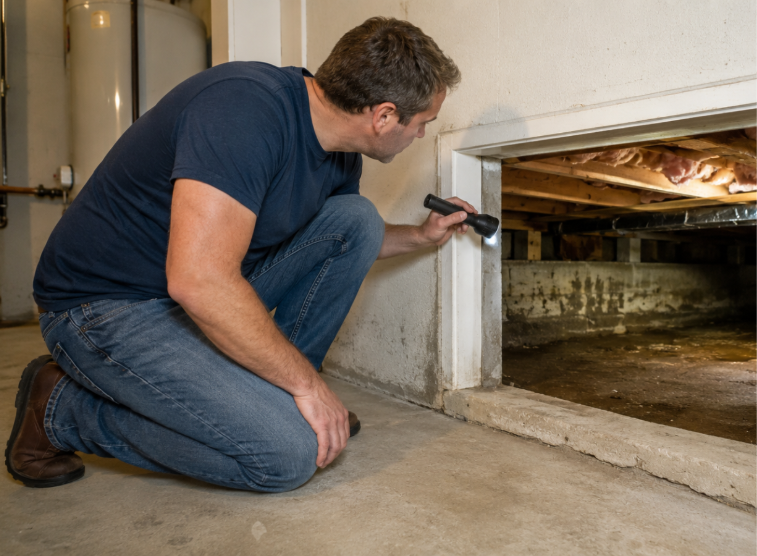
Your crawl space sits beneath your living areas, but the air inside it doesn’t necessarily stay there. As warm air rises through your home, the stack effect draws air upward from lower levels, including the crawl space. Moisture, mold spores, gases, and other airborne substances can travel with it, creating a direct connection between conditions below your floors and the air throughout your home.
When mold develops in this space, leaving it untreated can give the growth an opportunity to spread beyond where it started. Removing mold from a crawl space becomes necessary when growth is confirmed so you can address the existing problem before it affects additional areas of your home.
How Does Crawl Space Mold Go Unnoticed?
Your crawl space is easy to overlook because it sits outside the areas you use every day. With little light, limited ventilation, and difficult access, changes in moisture or humidity can develop without drawing your attention. Unless you have a specific reason to inspect the area, months can pass without anyone seeing what is happening below.
During that time, persistent dampness can create conditions that support mold growth on floor joists, subfloors, and other materials. Because these surfaces are largely hidden from view, mold can become more extensive before you see visible growth or notice other signs of a problem.
What Are the Signs There May Be Mold Beneath My Home?
You don’t necessarily have to see inside your crawl space to notice signs that mold could be growing there. A musty smell that persists upstairs can be one of the first indications, while elevated humidity can suggest that excess moisture is affecting conditions beyond the crawl space. You may also notice changes to your floors, including boards that begin to warp or sag as moisture affects the materials beneath them.
Changes in how you feel at home can provide another reason to investigate, particularly if allergy or asthma symptoms become worse indoors. If you’re able to safely look inside your crawl space, white, green, or black patches on floor joists, insulation, or ductwork provide a more direct indication of possible mold growth.
How Do I Confirm Mold in My Crawl Space?
Suspecting crawl space mold and confirming its presence are two different things. A professional inspection provides a thorough evaluation of the area, including conditions that could be contributing to mold growth. Mold and air quality testing can then help determine whether mold is present and whether spores are affecting the air inside your home.
These findings provide a clearer picture of the extent of the problem and the conditions beneath your floors. With that information, you can determine whether crawl space mold removal is necessary and what needs to be addressed as part of the treatment.
What Should I Do if Mold Is Confirmed?
Once mold has been confirmed, the priority shifts from identifying the problem to addressing both the growth and the conditions that allowed it to develop. Professional crawl space mold removal in Morristown, NJ, can reach affected areas that DIY treatments may miss and provide a more complete approach than treating only the mold that is readily visible.
Effective crawl space mold treatment also considers the source of excess moisture so the conditions supporting mold growth aren’t left in place. Depending on what is contributing to the problem, crawl space encapsulation may be recommended to help control moisture and reduce the likelihood of mold returning.
Protect Your Home From the Effects of Crawl Space Mold
Mold beneath your floors can affect more than an area you rarely see. Because air and moisture move between your crawl space and the living areas above, addressing mold at its source is an important part of protecting your home’s indoor environment.
Green Home Solutions provides crawl space mold removal in Morristown, NJ, with solutions designed to address existing growth and the conditions contributing to it. Our approach to mold removal in crawl spaces begins with understanding exactly what is happening beneath your home.
If you’ve noticed musty odors, moisture problems, changes to your flooring, or other possible signs of mold, contact us to schedule a crawl space inspection and get clear answers about what needs to be addressed.