
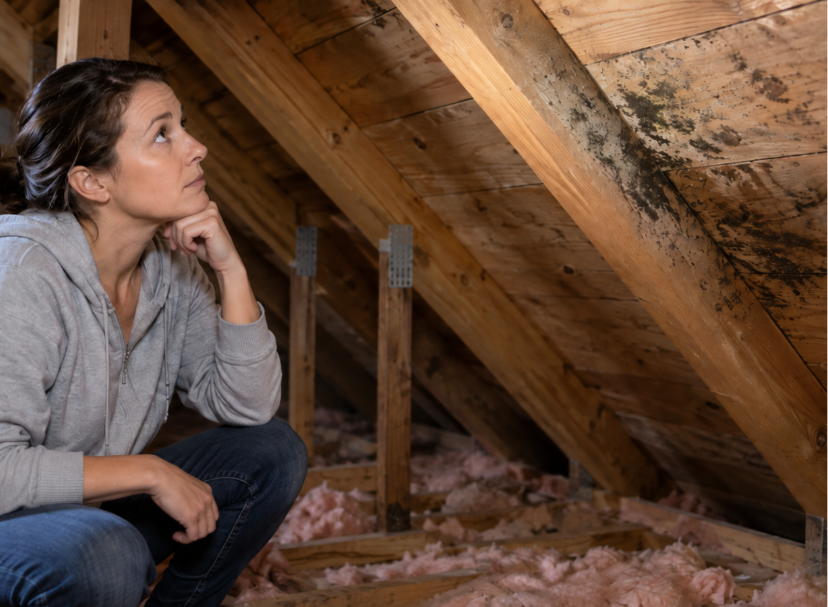
How a DIY Attic Mold Cleanup Can Leave Part of the Problem Behind
If you’re considering whether attic mold is something you could remove yourself, it’s important to understand that cleaning visible growth is only one part of the process. Attic mold typically develops because excess moisture has created conditions that support growth, so the source of that moisture also needs to be identified and corrected.
Condensation, roof leaks, inadequate ventilation, and exhaust air released into the attic can all contribute to damp conditions. Mold may then develop across framing, roof decking, insulation, and other materials, including areas that aren’t easy to see. Because both the extent of the growth and the moisture source can be difficult to determine, a DIY cleanup can leave important parts of the attic mold problem unresolved.
Attic Mold Can Become More Difficult to Address Over Time
An attic mold problem can grow more extensive when the moisture behind it is not corrected. Mold may spread across roof decking, framing, rafters, insulation facing, and other organic materials in the space. Persistent dampness can also affect the condition of wood and reduce the performance of insulation.
As the affected area grows, spores can become airborne and move through openings between the attic and the rooms below. This creates the potential for an attic mold problem to influence other parts of your home as well. Prompt treatment helps limit the amount of material requiring attention and can reduce the likelihood that remediation will become more complex.
The Steps Needed to Fully Address Attic Mold
A complete approach to attic mold removal in Morristown, NJ, begins by evaluating both the mold growth and the conditions behind it. The attic needs to be inspected to determine how far the problem extends and what allowed enough moisture to accumulate for mold to develop.
The affected area is then contained before mold-affected materials are disturbed. Existing growth is removed or treated using methods appropriate for the surfaces involved, and materials that have been damaged beyond treatment may need to be replaced. Just as importantly, the underlying moisture problem must be corrected, whether it involves a roof leak, condensation, poor ventilation, or another condition. Without this step, removing the visible growth does not fully resolve the attic mold problem.
The Limits of DIY Attic Mold Removal
A DIY mold removal attempt can improve the appearance of affected surfaces while still leaving important parts of the problem unresolved. Mold may be present in areas that aren’t immediately visible, and the moisture source behind the growth may not be obvious without a more thorough assessment.
Remediation work also requires controlling spores while affected materials are disturbed and selecting treatment methods appropriate for the surfaces involved. This can require specialized tools, containment materials, and experience that most homeowners don’t have. Even when visible growth is gone, it can be difficult to determine whether hidden mold or the underlying moisture problem remains.
What Makes DIY Attic Mold Removal Risky
Attics are often cramped, difficult to navigate, and filled with hazards that are easy to overlook. Exposed fasteners, electrical wiring, insulation, low-clearance sections, and narrow ceiling joists can make the work physically demanding and increase the risk of injury. Temperatures can also become uncomfortable or unsafe during periods of extreme heat or cold.
Mold introduces an additional safety concern. Disturbing growth can send spores and other airborne particles into the space around you. Without appropriate protective equipment, that exposure can cause irritation and may be especially problematic for people with allergies, asthma, or other respiratory sensitivities.
How Professional Remediation Takes a Broader Approach
Professional attic mold treatment begins with understanding the full scope of the problem. A trained technician can evaluate how far the growth extends, determine what moisture condition allowed it to develop, and select the treatment methods appropriate for the attic and materials involved.
The affected area can then be contained before remediation begins. Existing growth is thoroughly addressed, materials are treated or replaced as needed, and the underlying moisture problem is identified so corrective steps can be taken. This approach addresses both the current mold and the conditions that contributed to it.
Turn to Experienced Professionals to Treat Attic Mold
A surface cleanup can leave too much uncertainty about whether hidden growth, airborne spores, or the moisture problem behind attic mold has been addressed. Professional remediation provides a more complete approach, with trained technicians who can evaluate the attic, select the appropriate treatment methods, and manage containment throughout the process.
Green Home Solutions provides attic mold removal in Morristown, NJ, with services tailored to the mold and moisture conditions present in your attic. We can assess affected materials, identify what contributed to the growth, and provide the appropriate treatment for your property.
Contact us today to schedule an attic inspection and find out what’s needed to resolve your mold problem.