
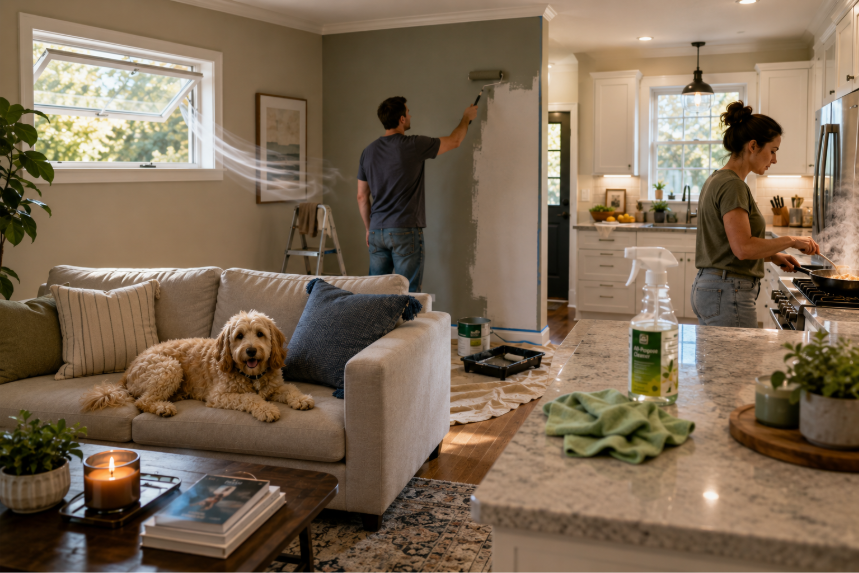
The air inside your home is affected by countless everyday factors. Some are easy to recognize, while others develop gradually without drawing much attention. Although poor indoor air quality is often associated with a single issue, it is more commonly the result of several conditions working together.
Learning about the most common indoor air quality problems can help you recognize potential issues sooner and understand what steps may help improve the air you breathe.
Airborne Particles Build Up More Easily Than You Think
Dust is one of the most familiar indoor air pollutants, but it is far from the only one. Pet dander, pollen, dust mites, and fine particles from everyday activities can all circulate through your home. Some enter from outdoors, while others are generated inside through normal household routines.
Regular cleaning, changing HVAC filters, and reducing dust buildup can help limit these particles. However, if dust seems to return quickly after cleaning or your home always feels dusty despite routine maintenance, it may be worth investigating whether other factors are contributing to your indoor air quality.
Excess Moisture Can Lead to Bigger Problems
Moisture plays an important role in indoor air quality. Leaks, condensation, elevated humidity, and poor ventilation all create conditions where mold can develop and spread. Even areas that are not immediately visible, such as behind walls or beneath flooring, can retain enough moisture to support hidden mold growth.
Reducing indoor humidity, repairing leaks promptly, and using exhaust fans in kitchens and bathrooms can help limit excess moisture. Addressing these conditions early may prevent larger indoor air quality problems from developing over time.
Household Products Can Introduce Pollutants
Many of the household products used every day release substances into the air. Paints, cleaning products, adhesives, air fresheners, candles, and even some furnishings may emit volatile organic compounds (VOCs). While many of these products are commonly used, they can still influence your indoor air, particularly when ventilation is limited.
Whenever possible, improve airflow while using products that release VOCs, and follow manufacturer recommendations for ventilation. Allowing fresh air to circulate helps reduce the concentration of airborne chemicals that may remain indoors after use.
Combustion Sources Affect Indoor Air
Appliances and equipment that burn fuel can also influence indoor air quality. Gas stoves, fireplaces, furnaces, and attached garages all have the potential to introduce combustion byproducts into your home if they are not properly vented or maintained.
Routine maintenance, proper ventilation, and functioning carbon monoxide detectors are important steps for reducing these risks. Because some combustion gases are invisible and odorless, they may not be noticeable without appropriate testing.
Professional Testing Identifies What Is Affecting Your Air
Many indoor air quality problems produce similar signs, while others develop without obvious symptoms at all. Indoor air quality testing in Morristown, NJ, provides a more complete understanding of what is present in your home by evaluating pollutants alongside conditions that may be contributing to indoor air quality concerns.
Testing can identify airborne mold spores, VOCs, fine particulate matter, combustion gases, radon, formaldehyde, and other pollutants. It can also identify conditions such as excess moisture that may contribute to poor indoor air quality. With reliable results, you can make informed decisions about the most appropriate next steps for your home.
Understand and Improve Your Indoor Air
Many indoor air quality problems can be reduced by improving ventilation, managing moisture, and limiting common sources of indoor pollutants. Professional testing provides the additional information needed to understand whether these measures are enough or whether additional action is recommended.
Green Home Solutions provides indoor air quality testing in Morristown, NJ, to help you better understand your indoor air and identify conditions that may be affecting it. Our specialists explain the findings, answer your questions, and recommend practical solutions based on the results.
Contact us today to schedule an indoor air quality assessment and take the next step toward healthier indoor air.