
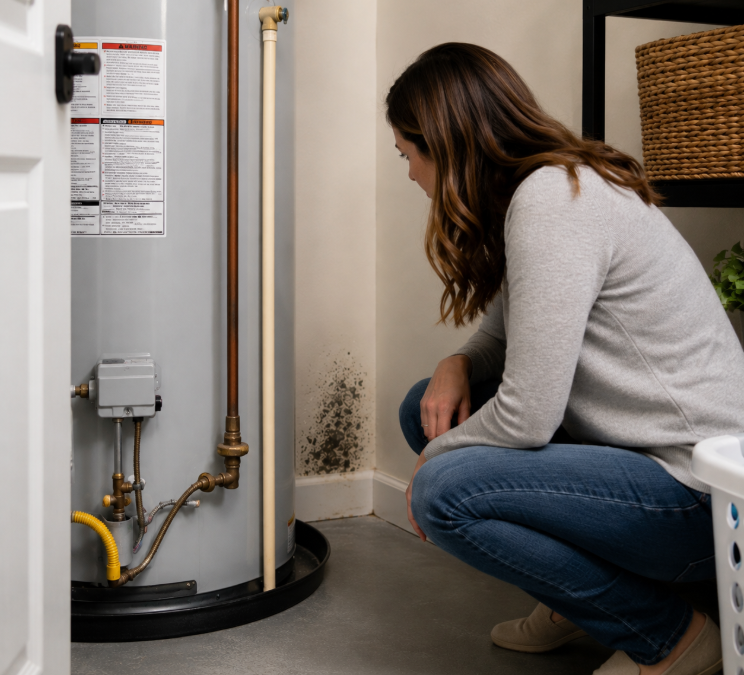
Bathrooms, basements, closets, crawl spaces, and areas behind furniture do not seem to have much in common at first glance. Yet these are some of the places where mold is most likely to develop.
What connects them is not their location within your home, but the conditions they share. Moisture, limited airflow, slow drying, and water intrusion can all create opportunities for mold growth, regardless of where they occur.
Areas Exposed to Frequent Moisture
Some areas of your home rarely have an opportunity to stay completely dry. Bathrooms and kitchens are used throughout the day, creating a cycle of moisture that repeats itself again and again. While each individual source of water may seem insignificant, the cumulative effect can create favorable conditions for mold growth, particularly in corners, around fixtures, and on materials that regularly encounter dampness.
Spaces That Dry Slowly
Drying conditions vary throughout your home. Basements and crawl spaces often retain dampness longer than living areas due to elevated humidity levels, reduced sunlight, and limited ventilation. When moisture remains present for extended periods, mold can begin developing on building materials, stored belongings, and other surfaces within the space.
Areas With Limited Airflow
Not every part of your home benefits from consistent air movement. Spaces tucked behind furniture, crowded storage areas, and seldom-used closets can hold dampness longer than more open parts of the property. When those conditions persist, mold has an opportunity to become established without attracting immediate attention. Because these areas are not frequently inspected, growth can continue for an extended period before it is discovered.
Spaces Affected by Leaks
Leaks can affect areas throughout your home, including walls, ceilings, flooring, and other building materials. Even relatively minor water intrusion can create conditions that support mold growth when dampness remains present. Addressing leaks promptly helps limit the amount of time moisture is allowed to affect surrounding materials.
What Happens When Mold Continues Growing
Finding mold is only part of the picture. The conditions that allowed it to develop are often just as important to understand as the mold itself. An inspection can help determine where mold is present and identify what is contributing to it. When treatment is necessary, mold remediation in Morristown, NJ, can help remove mold while addressing the factors behind its growth.
Help Address the Conditions Behind Mold Growth
Moisture, limited airflow, and unresolved water issues can all create opportunities for mold to develop. Identifying which of these factors is affecting your home is an important part of addressing the problem effectively.
Green Home Solutions helps homeowners evaluate mold concerns and determine what is contributing to them. If you need mold remediation in Morristown, NJ, our team can assess the situation, help you better understand the issue, and recommend an appropriate course of action. Contact us today to schedule a mold inspection.