If you’ve noticed a musty smell, visible mold, or high humidity in your home, your first thought is probably:
“Do I need mold remediation?”
Sometimes the answer is yes.
But in many cases, mold remediation is only part of the solution—or not the right starting point at all.
Understanding what your home actually needs can save you time, money, and frustration.
The Short Answer: It Depends on the Cause
Mold is usually a symptom—not the root problem.
That means the real question isn’t just:
“Do I need mold remediation?”
It’s:
“What’s causing the conditions that allowed mold to grow?”
When You Likely DO Need Mold Remediation
Mold remediation is typically necessary when there is active mold growth that needs to be safely removed.
You may need remediation if:
- You see visible mold on walls, ceilings, or structural materials
- There is known water damage or prolonged moisture exposure
- Mold is spreading or worsening over time
- There are strong, persistent musty odors
- Testing has confirmed elevated mold levels
In these cases, removing the contamination is an important step.
When Mold Remediation Alone Isn’t Enough
Even when remediation is needed, it’s rarely the full solution.
If the underlying cause isn’t addressed, mold can return.
This is especially common when:
- Humidity levels remain high
- Crawl spaces or basements are damp
- Airflow and ventilation are poor
- Moisture sources are still present
This is why some homeowners experience recurring mold issues after treatment.
When You May NOT Need Mold Remediation First
In some cases, mold isn’t the primary issue—it’s the result of environmental conditions.
You may not need remediation as a first step if:
- There’s a musty smell but no visible mold
- Your home feels consistently humid
- The issue is isolated to a crawl space or basement
- Mold was previously removed but conditions haven’t changed
In these situations, focusing on moisture control and air quality may be more effective.
Other Solutions That May Be Needed
Depending on your home, the right solution may involve one or more of the following:
Moisture Control
Addressing the source of moisture is critical to preventing mold growth.
Crawl Space Encapsulation
Sealing and controlling the crawl space environment can significantly reduce humidity and mold risk.
Basement Moisture Solutions
Managing dampness and airflow in basements helps eliminate odors and prevent mold.
Dehumidification Systems
Whole-home or targeted dehumidifiers help maintain stable humidity levels.
Air Quality Improvements
Air purification and ventilation improvements can reduce airborne contaminants and odors.
A Better Way to Approach the Problem
Instead of asking:
“What service do I need?”
A better approach is:
“What is causing this issue—and how do I fix it for good?”
This is where a full-system evaluation makes the difference.
A Whole-Home Approach to Indoor Air Quality
At Green Home Solutions, we take a full-system approach to indoor air quality problems by looking beyond surface-level symptoms. Our Full-Cycle IAQ approach focuses on identifying moisture sources, correcting environmental conditions, improving air quality, and helping prevent future issues before they return.
How We Help Homeowners Make the Right Call
At Green Home Solutions, we don’t start with a one-size-fits-all recommendation.
We start by understanding your home.
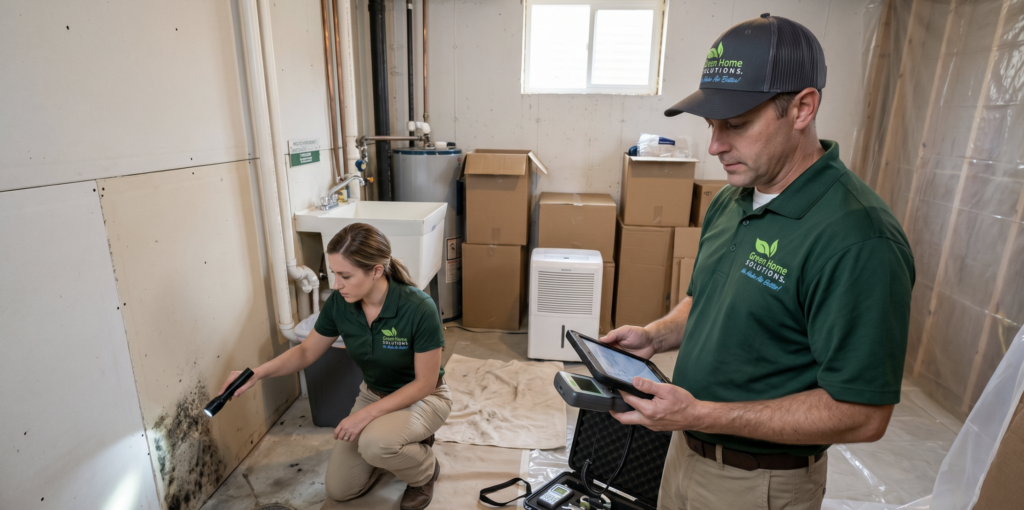
Our process includes:
- Identifying moisture sources
- Evaluating humidity and airflow
- Determining if mold is present
- Recommending the right combination of solutions
Sometimes that includes mold remediation.
Sometimes it doesn’t.
But it always focuses on long-term results.
Common Scenarios (And What They Usually Need)
“I smell something musty, but don’t see mold.”
→ Likely a moisture or airflow issue. Inspection recommended.
“I had mold removed before, but the smell is back.”
→ Underlying moisture likely wasn’t addressed.
“My crawl space is damp or smells.”
→ Moisture control and encapsulation may be needed.
“My basement feels humid or stale.”
→ Dehumidification and air control are often the solution.
“I see visible mold growing.”
→ Mold remediation is likely necessary, along with addressing the cause.
Don’t Guess—Get Clarity
Trying to solve mold issues without understanding the full picture can lead to repeated problems and unnecessary costs.
The best first step is a professional evaluation that looks at your home as a complete system.
Schedule an Assessment
If you’re not sure whether you need mold remediation or something else, we can help.
Our team will assess your home, explain what’s happening, and recommend a clear path forward.
Schedule your assessment today or call 1-800-SOLUTIONS and get the answers you need.
Frequently Asked Questions
What’s the difference between mold remediation and mold removal?
Mold remediation is a broader process focused on identifying, containing, removing, and helping prevent mold growth from returning. It’s not just about cleaning visible mold. Effective remediation also involves addressing the moisture conditions that allowed mold to develop in the first place.
How do I know if I actually need mold remediation?
If you see visible mold, notice strong musty odors, have experienced water damage, or testing confirms elevated mold levels, remediation may be necessary. However, some homes primarily need moisture control, humidity management, or crawl space solutions instead of full remediation.
Can mold come back after remediation?
Yes. Mold can return if the underlying moisture problem is not corrected. High humidity, poor ventilation, damp crawl spaces, and unresolved leaks are some of the most common reasons homeowners experience recurring mold issues.
What causes a home to smell musty even when mold isn’t visible?
A musty smell is often a sign of excess moisture, elevated humidity, hidden microbial growth, or poor airflow. In many cases, the odor starts before mold becomes visible.
Is high humidity enough to cause mold growth?
Yes. Consistently high indoor humidity creates conditions where mold can grow on surfaces like drywall, wood, insulation, and dust. Controlling humidity is one of the most important parts of long-term mold prevention.
Does every damp crawl space need mold remediation?
Not always. Some crawl spaces primarily need encapsulation, dehumidification, or moisture control improvements. If active mold growth is present, remediation may also be necessary.
Can basement moisture affect the rest of the home?
Absolutely. Air from basements and crawl spaces can circulate throughout the home, impacting indoor air quality, odors, and humidity levels in upstairs living areas.
What is the first step if I’m unsure what my home needs?
A professional assessment is usually the best starting point. Evaluating moisture levels, airflow, humidity, and visible or hidden mold helps determine whether remediation, moisture control, or another solution is the right fit.